

Executive Summary
The Loseby Lecture 2026 brought together legal, judicial, financial and business experts to examine a question of immediate relevance to Vietnam: what kind of legal architecture is required for the Vietnam International Financial Centre (“VIFC”) to become internationally competitive?
The programme addressed the development of English commercial law and the role of Common Law in international finance, alongside the evolution of specialised legal frameworks for international financial centres. The discussions extended beyond legal theory to practical issues including judicial independence, the finality and enforcement of judgments, the use of Vietnamese real property as collateral, legal capacity for applying Common Law principles, and coordination between the VIFC Specialist Court and the new International Arbitration Centre.
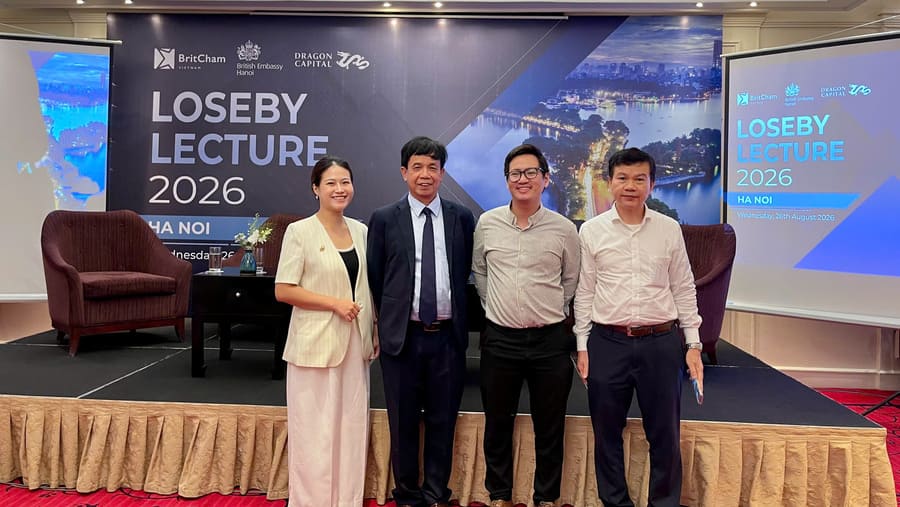
The significance of the event, however, also lies in the name it carries. The Loseby Lecture commemorates British solicitor Francis Henry Loseby, whose representation of Nguyễn Ái Quốc in Hong Kong in the early 1930s became a powerful illustration of the Rule of Law in practice. That history gives particular resonance to the Lecture’s contemporary message: law creates value only when people can trust it, rely upon it and enforce the rights it confers.
As Vietnam develops the VIFC, this principle has an increasingly direct economic meaning. A financial centre does not compete only through tax incentives, market access, infrastructure or financial products. It also competes through the clarity of its rules, the independence and competence of its institutions, the quality of its judgments and the effectiveness of enforcement.
The Loseby Lecture 2026: Law, Finance and Institutional Trust
Held in Hanoi on 26 August 2026, the Loseby Lecture 2026 was organised by the British Chamber of Commerce Vietnam in collaboration with the British Consulate General in Ho Chi Minh City and Dragon Capital Vietnam Fund Management Joint Stock Company. A related event was held in Ho Chi Minh City on 25 August 2026.
The Hanoi programme comprised two principal lectures addressing the development of legal systems for international financial centres and their role in supporting international finance and commerce.
Lord Richard Snowden, Justice of the Supreme Court of the United Kingdom, delivered a condensed version of the Loseby Lecture, focusing on the development of English commercial law and the role of Common Law in international finance and commerce.
Andrew Oldland KC, Head of TheCityUK’s International Financial Centre Task Force, presented an overview of the legal frameworks adopted by international financial centres, their evolution over the past three decades and their principal institutional features. His presentation also addressed Vietnam’s Resolution No. 222 and the legislation governing the VIFC Specialist Court.
The panel discussion then considered a series of highly practical issues:
- the interaction between Common Law and Civil Law systems;
- coordination between the VIFC Specialist Court and Vietnam’s national courts;
- the use of Vietnamese real property as collateral in transactions conducted within the VIFC;
- the development of sufficient legal capacity to apply Common Law principles; and
- coordination between the Specialist Court and the new International Arbitration Centre.
These subjects go to the heart of the VIFC’s future operation. They concern not only how the Centre will be regulated, but also how legal rights will be interpreted, adjudicated and ultimately enforced.
Why the Event Bears the Name “Loseby”
The name of the Lecture carries both historical and legal significance.
Francis Henry Loseby was a British solicitor practising in Hong Kong when Nguyễn Ái Quốc—later President Hồ Chí Minh—was arrested by the colonial authorities in 1931. Nguyễn Ái Quốc faced deportation in circumstances that could have led to his transfer into French custody in Indochina, where he had already been sentenced to death in absentia.
Loseby acted as his solicitor and challenged the legality of the detention and proposed deportation through the courts. The proceedings ultimately reached the Judicial Committee of the Privy Council. A settlement was reached that allowed Nguyễn Ái Quốc to leave Hong Kong under arrangements intended to protect him from immediate arrest by the French authorities.
Loseby’s role was not simply an act of personal assistance. It demonstrated a fundamental proposition of the Rule of Law: governmental power must remain subject to law, and every person must be entitled to legal representation and procedural protection, regardless of political pressure or the identity of the individual concerned.
The relationship between Loseby and Hồ Chí Minh continued beyond the proceedings. In 1960, Loseby visited Hanoi with his family and was received by President Hồ Chí Minh—an enduring symbol of the personal friendship and historical connection arising from the case.
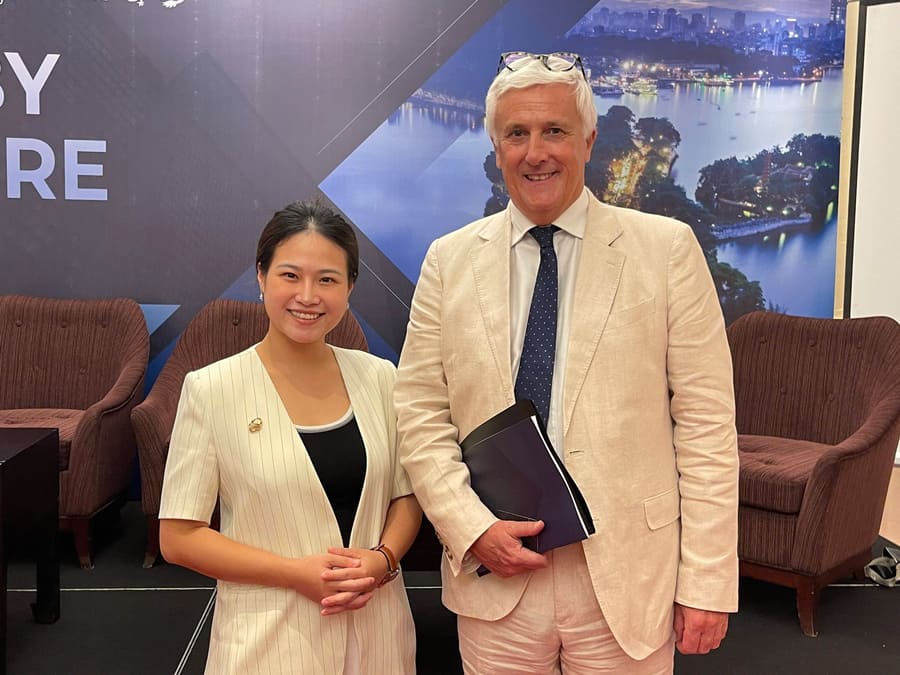
The inaugural Loseby Lectures were held in Hanoi and Ho Chi Minh City in 2015. The series was conceived not merely to commemorate a historical legal case, but to create a forum for examining contemporary questions concerning the Rule of Law, international commerce and dispute resolution.
The name “Loseby” therefore represents more than an individual lawyer. It represents professional independence, fidelity to legal process, access to justice and the capacity of law to restrain power.
This historical foundation gives the 2026 Lecture particular coherence. The discussion may have moved from an individual liberty case in colonial Hong Kong to the design of a modern international financial centre in Vietnam, but the underlying question remains the same:
Can individuals and businesses trust legal institutions to protect their rights when those rights are tested?
From the Rule of Law to International Finance
At first sight, the legal defence of an individual in 1931 and the establishment of an international financial centre in 2026 may appear to belong to entirely different contexts.
In substance, however, they are connected by a common principle: legal certainty is meaningful only where rights can be asserted before independent institutions and effectively enforced.
International finance depends on trust. Parties must be able to understand the legal consequences of their transactions, allocate risk through contracts and predict how disputes will be resolved. Creditors need confidence that security interests will be recognised. Investors need to know that regulatory decisions will be taken consistently. Businesses need assurance that judgments and arbitral awards will produce practical results.
Where the applicable rules are unclear, inconsistent or difficult to enforce, investors will price that uncertainty into their decisions. They may require a higher return, impose additional contractual protections, reduce the size or duration of an investment, or decide not to proceed with the transaction.
Lord Snowden observed that uncertainty concerning contractual terms, unfamiliar legal systems or judicial independence may generate an additional risk premium. That premium increases both transaction costs and financing costs and can ultimately reduce the volume of transactions undertaken.
Legal certainty is therefore not merely an institutional aspiration. It has measurable economic consequences.
Why Common Law Matters to International Financial Centres
The prominence of Common Law in international finance does not mean that it is inherently superior to Civil Law. Successful financial markets operate under different legal traditions.
Its relevance lies principally in its familiarity to international market participants and its accumulated body of commercial jurisprudence. Common Law has developed through the adjudication of commercial disputes involving contracts, financing arrangements, fiduciary duties, trusts, security interests and complex financial instruments.
Several characteristics are particularly valued in cross-border transactions:
- close attention to contractual language and commercial context;
- detailed judicial reasoning;
- the use of precedent to promote consistency;
- the capacity to respond incrementally to new commercial practices; and
- established remedies for breach, default and the protection of proprietary rights.
For an international financial centre, these features can contribute to predictability. Market participants are better able to assess how contractual provisions may be interpreted and how similar disputes have previously been decided.
The challenge for Vietnam is therefore not to choose between Common Law and Civil Law as competing systems. It is to determine how selected Common Law principles and institutional practices may operate effectively within Vietnam’s constitutional and statutory framework.
A hybrid model can succeed only if the relationship between its different legal components is sufficiently clear. Investors must be able to determine when general Vietnamese law applies, when VIFC-specific regulations prevail, when foreign law may be selected, and how conflicts between different legal regimes will be resolved.
Legal Infrastructure as a Source of Competitiveness
International financial centres traditionally compete through market size, taxation, geographic position, financial infrastructure, human capital, regulatory flexibility and connectivity to global markets.
Increasingly, however, they also compete through legal infrastructure.
For market participants, the attractiveness of a financial centre depends on a sequence of connected questions:
- What law governs the transaction?
- Which institution has jurisdiction over a dispute?
- Is that institution independent and appropriately qualified?
- Will its decision be reasoned, consistent and predictable?
- When will the decision become final?
- Can it be enforced against assets located outside the financial centre?
- What happens if the debtor becomes insolvent?
If these questions cannot be answered with sufficient confidence, tax incentives and modern infrastructure may not be enough to attract long-term international capital.
Dominic Scriven, Chairman and Founder of Dragon Capital, emphasised that legal clarity, consistency and predictability are essential to investor confidence, long-term business planning and firm capital commitments.
Accordingly, law should be understood as part of the VIFC’s economic infrastructure—alongside payment systems, exchanges, financial institutions, technology and professional services.

The Specialist Court: Establishing Trust from the Outset
The proposed VIFC Specialist Court is one of the most important elements of this legal infrastructure.
A specialised court may offer several advantages. It can develop expertise in sophisticated financial and commercial transactions, build a coherent body of decisions and provide procedures more closely aligned with the expectations of international businesses.
Features discussed in connection with the VIFC framework include the use of English, the application of foreign law where legally permitted, the appointment of qualified foreign judges and the use of Common Law principles and case law.
International experience from centres such as the Dubai International Financial Centre, the Astana International Financial Centre and Hong Kong illustrates the importance of experienced commercial judges, clear jurisdictional rules and well-reasoned judgments.
However, the formal establishment of a Specialist Court will not, by itself, create market confidence. Its credibility will depend on how it operates in practice.
Andrew Oldland KC identified three areas requiring particular attention: judicial independence, the finality of judgments and enforcement.
Judicial independence and competence
International investors must be confident that judges can decide cases impartially on the basis of law and evidence.
The court must also possess the technical capacity to understand complex financial instruments, cross-border contractual structures and unfamiliar questions of foreign law. Judicial reasoning should be clear enough to guide future market conduct and allow parties to assess how similar disputes may be resolved.
Predictability does not arise from statutory provisions alone. It is also produced by the quality, consistency and accessibility of judicial decisions.
Finality of judgments
Businesses need to know when a dispute has conclusively ended.
The relationship between the Specialist Court and Vietnam’s ordinary court system must therefore be defined with precision. Relevant matters include the availability and scope of appeals, the authority responsible for reviewing decisions, the date on which judgments become effective and whether decisions may subsequently be reconsidered within the national judicial system.
Finality directly affects the time, expense and certainty of dispute resolution. A sophisticated court system will be of limited commercial value if parties cannot determine when its judgments become binding and no longer subject to challenge.
Enforcement
A judgment is commercially valuable only if it can be enforced.
This issue becomes particularly important when the relevant assets are located outside the territorial or regulatory scope of the VIFC. A financial institution may obtain a favourable judgment from the Specialist Court, while the debtor’s bank accounts, shares, receivables, equipment or real property are situated elsewhere in Vietnam.
The legal framework must explain how the Specialist Court, national courts, enforcement authorities, asset registries and other competent agencies will coordinate. It must also address collective enforcement mechanisms, particularly insolvency proceedings.
Without an effective bridge between adjudication and enforcement, a successful claim may remain merely a legal victory on paper.
Vietnamese Real Property as Collateral: A Practical Test
The use of Vietnamese real property as collateral in a VIFC transaction provides a practical illustration of the interaction between different legal regimes.
Where a loan or financing arrangement is entered into within the VIFC and secured by land-use rights or other real property located elsewhere in Vietnam, several questions arise:
- Which law governs the creation of the security?
- What formalities are required for the security to be valid?
- Where and how must it be registered or perfected?
- What priority will the secured creditor enjoy?
- Which court has jurisdiction over disputes concerning the collateral?
- How will the asset be realised following a default?
- What happens if the security provider becomes insolvent?
These issues sit at the intersection of financial law, property law, secured transactions, land law, insolvency and civil enforcement.
If the relevant regimes are not properly coordinated, an arrangement that appears secure in the transaction documents may prove difficult to enforce. For lenders and institutional investors, the enforceability of the collateral package will therefore be as important as the commercial terms of the financing.
The Relationship Between the Specialist Court and Arbitration
An internationally competitive financial centre requires an integrated dispute-resolution ecosystem rather than a single adjudicative institution.
The VIFC Specialist Court and the new International Arbitration Centre should perform complementary roles. Their relationship will need to address matters such as:
- the circumstances in which the parties may select arbitration;
- the boundaries of the Specialist Court’s jurisdiction;
- judicial support for arbitral proceedings;
- the granting and enforcement of interim measures;
- challenges to jurisdiction and the setting aside of awards;
- the recognition and enforcement of arbitral awards; and
- enforcement against assets outside the VIFC.
International businesses often select arbitration for reasons of neutrality, confidentiality, procedural flexibility and cross-border enforceability. At the same time, arbitration depends on effective judicial support.
The competitiveness of the VIFC will therefore depend not on whether courts or arbitration are preferred in the abstract, but on whether the two mechanisms operate coherently and efficiently.
Building the Necessary Legal Capacity
A legal framework may contain sophisticated concepts but still fail if the institutions and professionals responsible for applying them lack the necessary capacity.
The practical use of Common Law principles will require more than legislative references to precedent or foreign law. It will require judges, lawyers, arbitrators, in-house counsel, regulators and enforcement officials who can work confidently across different legal traditions.
Relevant capabilities include:
- analysing and distinguishing precedents;
- reasoning by analogy;
- interpreting complex commercial contracts;
- establishing and applying foreign law;
- drafting clear and persuasive judgments;
- managing evidence in cross-border disputes; and
- understanding the interaction between regulation, private law and enforcement.
This will require sustained investment in professional education, judicial training, legal English, publication of decisions and engagement with practitioners and institutions from established financial centres.
For Vietnamese law firms, the VIFC is also likely to create a more integrated field of practice. Legal advisers will increasingly need to connect market entry, corporate structuring, financial regulation, contracts, security, dispute resolution, arbitration, enforcement and insolvency.
The Enduring Meaning of Loseby
The significance of the Loseby Lecture 2026 lies in the connection it creates between legal history and Vietnam’s contemporary economic ambitions.
Francis Loseby’s representation of Nguyễn Ái Quốc demonstrated that the Rule of Law is not an abstract declaration. Its value emerges when legal institutions are required to protect a person against the exercise of public power.
Nearly a century later, the institutional context has changed, but the underlying principle remains relevant. Investors and financial institutions must also be able to rely on law when rights are contested, contracts are breached, borrowers default or regulatory decisions are challenged.
The thread connecting Loseby’s work to the VIFC may therefore be expressed as follows:
Legal representation → due process → Rule of Law → institutional trust → commercial certainty → international investment and finance.
The progression is not merely symbolic. It shows why a lecture named after a lawyer who defended an individual has become an appropriate forum for discussing the legal foundations of an international financial centre.
Both concern the capacity of law to create trust.
Conclusion: An International Financial Centre Is Also a Legal Proposition
The VIFC will not be judged solely by the number of financial institutions it attracts or the amount of capital flowing through it. It will also be judged by whether market participants trust its rules and institutions when a transaction does not proceed as planned.
Vietnam has taken important steps towards establishing the Centre and its specialised institutions. The next stage will require sustained attention to the relationship between general Vietnamese law and VIFC-specific rules, the independence and competence of the Specialist Court, the finality of judgments, enforcement against assets outside the Centre, insolvency, secured transactions and coordination with international arbitration.
The central lesson of the Loseby Lecture 2026 is therefore both legal and economic:
An international financial centre needs more than capital, infrastructure and incentives. It needs a legal system in which market participants can place justified confidence.
Good laws define rights. Independent and capable institutions create trust. Effective enforcement converts legal rights into commercial reality.
In this respect, the Loseby name remains particularly meaningful. From the defence of Nguyen Ai Quoc in Hong Kong in 1931 to the development of the Vietnam International Financial Centre in 2026, the enduring principle is that the value of law is measured not only by what it says, but by whether people can trust it, rely upon it and enforce it.
That principle may ultimately become one of the decisive conditions determining whether the VIFC develops into a credible regional financial hub or remains principally an ambitious framework on paper.
References
- British Chamber of Commerce Vietnam – The Loseby Lecture 2026
- VietnamPlus – Legal transparency key to making VIFC more attractive: experts
- VnEconomy – The UK supports Vietnam in enhancing the legal framework for VIFC
- UK Foreign, Commonwealth & Development Office – The Rule of Law and the inaugural Loseby Lectures
Disclaimer: This article is intended for general informational and professional discussion purposes only. It does not constitute legal advice in relation to any specific transaction, dispute or investment decision.