

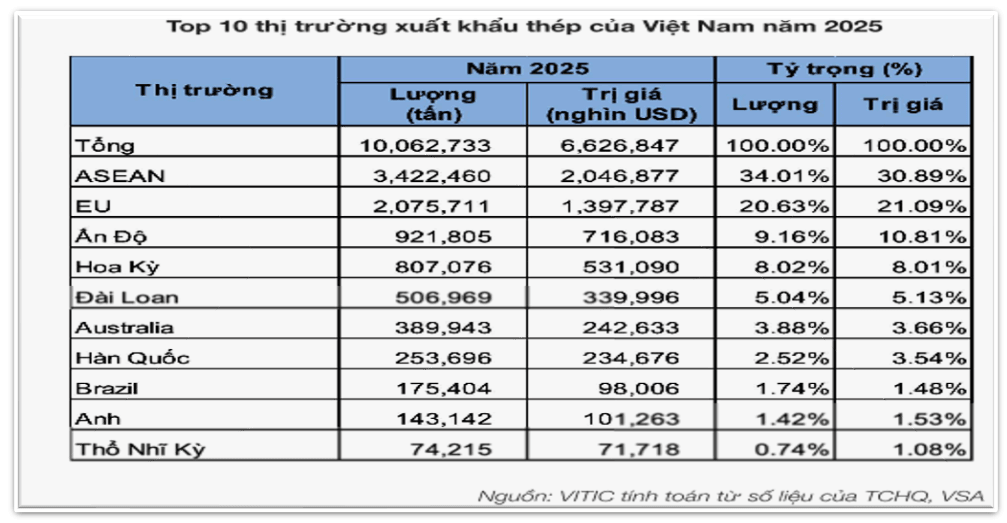
From 1 October 2026, Vietnamese steel exporters will need stronger upstream traceability, Mill Test Certificates and supply-chain documentation to support access to the EU market
On 28 August 2026, the European Commission adopted Commission Implementing Regulation (EU) 2026/1963, establishing the types of evidence that importers must provide to demonstrate the country of melt and pour for steel products falling within the scope of the European Union’s new steel regulatory framework.
The Implementing Regulation was published in the Official Journal of the European Union on 31 August 2026, entered into force on 1 September 2026 and will apply from 1 October 2026.
For Vietnamese manufacturers and exporters supplying steel products to the EU, this should not be regarded merely as an additional customs-documentation requirement.
The new framework represents a broader shift in EU steel trade policy towards greater upstream traceability, requiring importers to establish where the steel was actually first produced in liquid form and subsequently cast into its first solid form.
In practical terms, proving that a finished steel product is exported from, or may qualify as originating in, Vietnam may no longer be sufficient for all regulatory purposes. Businesses must increasingly be capable of tracing the steel back to the jurisdiction where the underlying steel itself was originally melted and poured.
This distinction is particularly relevant for Vietnamese manufacturers that import slabs, billets, ingots, hot-rolled coils or other steel inputs from third countries and subsequently process those materials in Vietnam before exporting finished products to the European Union.
The regulatory development also needs to be considered against the broader EU steel regime introduced under Regulation (EU) 2026/1384, under which duty-free tariff quotas are set at approximately 18.3 million tonnes and imports exceeding the applicable quotas are subject to an out-of-quota duty of 50%.
The commercial implications may therefore be substantial.
1. What does country of melt and pour mean?
The concept of “country of melt and pour” concerns the jurisdiction in which crude steel or iron was first produced in its liquid state in a steelmaking or ironmaking furnace and was subsequently cast into its first solid state.
The concept may also cover the remelting of steel scrap.
The first solid state may take the form of a semi-finished product, such as a slab, billet or ingot, or in certain production processes may directly result in a finished steel product.
The key point is that melt and pour is intended to identify the location at which the steel itself was fundamentally created from a metallurgical perspective. It does not merely identify the country in which subsequent rolling, coating, cutting, finishing or other downstream processing took place.
For example, steel may be melted and cast into slabs in Country A, the slabs may then be imported into Vietnam and rolled or further processed into finished steel products in Vietnam, and the finished products may subsequently be exported to the EU.
For the purposes of the new EU traceability requirement, the relevant country of melt and pour would ordinarily remain Country A, notwithstanding the subsequent processing carried out in Vietnam.
This creates an important compliance issue for Vietnamese companies whose production models depend significantly on imported steel inputs.
2. Melt and pour should not be confused with preferential origin under the EVFTA
One of the most important legal distinctions for Vietnamese businesses is that country of melt and pour is not equivalent to preferential origin under the EU–Vietnam Free Trade Agreement (“EVFTA”).
Preferential origin under an FTA is determined by applying the origin rules prescribed by that agreement. Depending on the relevant product, those rules may involve wholly obtained criteria, changes in tariff classification, value-added requirements, specific manufacturing or processing operations, or other product-specific rules.
The melt-and-pour requirement addresses a different regulatory question:
In which country was the steel itself originally melted and cast?
Accordingly, a finished steel product may undergo substantial processing in Vietnam and potentially satisfy an applicable origin rule for one regulatory purpose, while the country of melt and pour remains the country in which the original steelmaking process occurred.
Vietnamese businesses should therefore avoid treating certificates or declarations of preferential origin under the EVFTA as substitutes for melt-and-pour evidence.
In practice, exporters increasingly need to maintain two separate but interconnected compliance trails: an origin file supporting the applicable customs or preferential-origin treatment, and a melt-and-pour traceability file establishing where the underlying steel was originally melted and cast.
This distinction should also be understood by sales teams and EU customers when negotiating documentation obligations.
3. Mill Test Certificates become the primary form of evidence
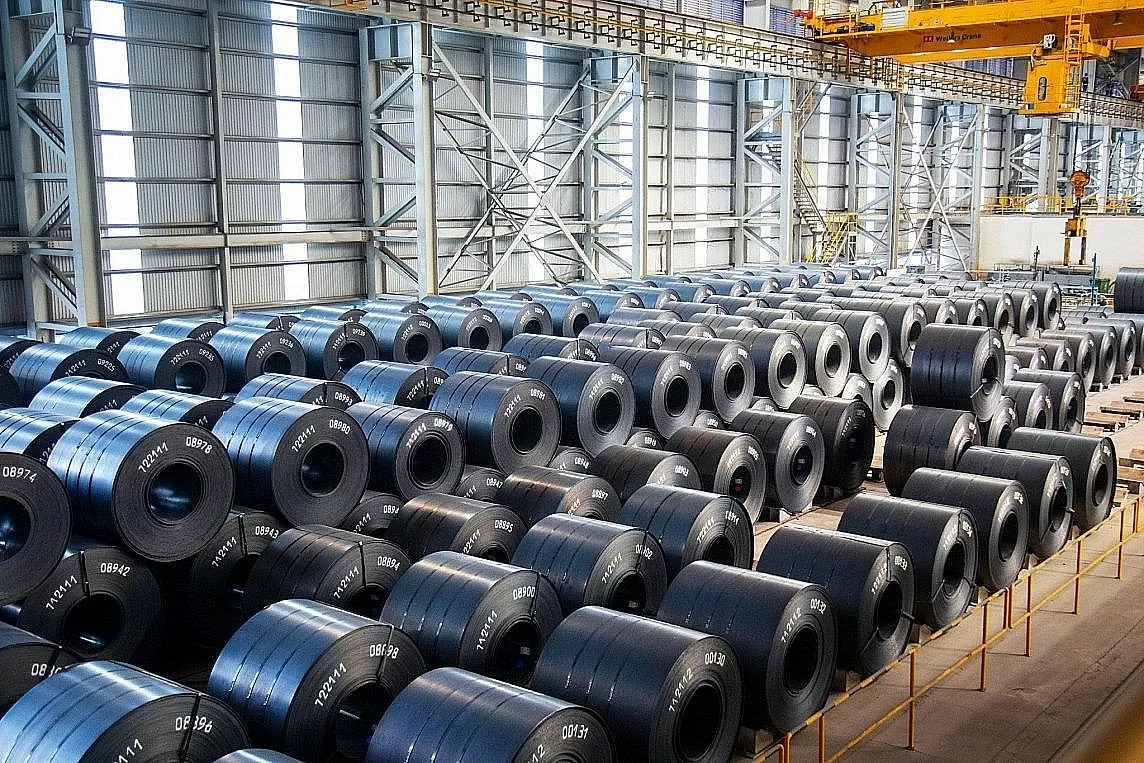
From 1 October 2026, importers bringing into the European Union steel products falling within the categories listed in Annex I to Regulation (EU) 2026/1384 must provide a Mill Test Certificate (“MTC”).
The MTC must identify both the country of melt and pour and the heat number of the imported steel.
The heat number is particularly important from a traceability perspective.
A heat number links a quantity of steel to a specific steelmaking batch and may therefore allow the product to be cross-referenced against production records, chemical composition data, quality records and other manufacturing information.
In regulatory terms, the requirement is designed to establish an auditable chain of evidence connecting the imported product back to the original steelmaking process.
This is materially different from relying solely on conventional commercial documentation such as invoices, packing lists or certificates of origin.
For Vietnamese exporters, an MTC should therefore no longer be regarded purely as a quality-control document.
Where products fall within the relevant EU steel regime, it becomes a core customs and trade-compliance document.
4. What if the Mill Test Certificate is incomplete?
The European Commission has recognised that Mill Test Certificates are not issued globally under a single harmonised format.
Accordingly, Regulation (EU) 2026/1963 allows customs authorities to consider supplementary evidence where an MTC has been provided but does not contain either the country of melt and pour or the relevant heat number.
The Regulation identifies a range of documentation that may potentially provide the missing information, including invoices, delivery notes, quality certificates, provisions contained in implemented purchase orders or contracts, long-term supplier declarations, cost-accounting and production records, customs documents from the exporting country, commercial correspondence and descriptions of the production process.
The existence of this flexibility should not be interpreted as meaning that any supplier statement or commercial invoice will automatically satisfy EU customs authorities.
The evidence must contain the relevant missing information and must be sufficiently reliable and capable of verification.
From a compliance perspective, the documents should therefore create a consistent evidentiary trail, linking the raw material, the relevant heat number, the manufacturing process and the exported product.
Where different documents contain inconsistent product descriptions, different heat references, incomplete supplier information or unclear links between the raw material and the finished product, the importer may face significant difficulties during customs verification.
5. A one-year transitional arrangement where no MTC is available
Regulation (EU) 2026/1963 provides an important transitional mechanism.
Between 1 October 2026 and 30 September 2027, where no Mill Test Certificate can be provided, the categories of documentation identified by the Regulation may also be considered by customs authorities as standalone evidence, provided that the relevant evidence identifies both the country of melt and pour and the heat number.
This may include invoices, delivery notes, quality certificates, contractual documentation, long-term supplier declarations, production and cost-accounting records, export-country customs documentation, commercial correspondence and production descriptions.
However, businesses should treat this arrangement carefully.
It is a temporary evidentiary accommodation, not a one-year limitation on the melt-and-pour requirement itself.
The underlying obligation to declare and demonstrate the country of melt and pour continues beyond 30 September 2027.
From 1 October 2027, the alternative documents listed in the Implementing Regulation will generally only be accepted as evidence complementary to an MTC, rather than as standalone substitutes for the MTC.
Vietnamese exporters should therefore use the transitional period to regularise documentation across their upstream supply chains rather than rely indefinitely on alternative records.
6. Alternative documentation may result in additional customs scrutiny
The practical consequences of relying on alternative evidence should also be considered.
Where the documentation is not presented in the form of a clear and complete MTC, EU customs authorities may need to undertake additional verification before accepting the declared melt-and-pour information.
This can create operational consequences even where the evidence is ultimately accepted.
Additional customs review may lead to delayed clearance, requests for further explanations, warehousing and demurrage costs, disruption to customer delivery schedules and potential contractual disputes with importers.
From a commercial perspective, therefore, the ability to provide a complete and internally consistent MTC at the outset may increasingly become a competitive advantage, particularly for suppliers serving large EU buyers with strict customs and procurement procedures.
Compliance efficiency may become part of supplier selection.
7. The formal obligation rests with the EU importer, but the underlying information must largely come from the Vietnamese exporter
Under Regulation (EU) 2026/1963, the formal obligation to provide the relevant evidence at the point of importation rests with the EU importer.
However, much of the information required to satisfy that obligation cannot realistically be generated by the importer itself.
Information concerning the steel mill, heat number, country of melting, country of casting, source of slabs or billets, manufacturing records and upstream supplier documentation normally sits with manufacturers and other participants further upstream in the supply chain.
Accordingly, a regulatory obligation imposed on the EU importer is likely to be transferred commercially to Vietnamese manufacturers and exporters through supply contracts, purchase orders, supplier codes and compliance undertakings.
EU customers may increasingly require Vietnamese suppliers to provide MTCs before shipment, warrant the accuracy of melt-and-pour information, maintain supporting upstream documentation, cooperate with customs verifications, retain records for agreed periods and assume liability where incorrect or incomplete documentation results in customs delays, additional duties or other losses.
Vietnamese exporters should therefore assess the new regime not only as a customs issue but also as a matter of contractual risk allocation.
Existing long-term sales arrangements with EU customers may need to be reviewed.
Likewise, Vietnamese manufacturers purchasing slabs, billets, coils or other steel inputs from overseas suppliers should ensure that their upstream purchase contracts provide an enforceable right to obtain the information and documentation required by EU rules.
8. Failure to provide adequate evidence can affect the admissibility of the goods
From 1 October 2026, importers must declare the country in which the steel was melted and poured in connection with the relevant customs declaration, supported by appropriate evidence.
The European Commission has made clear that this traceability obligation forms part of the conditions applicable to steel products entering the EU market under the Steel Regulation.
A failure to provide adequate melt-and-pour information may therefore result in significant customs consequences, including the inability to complete the importation under the applicable framework.
For exporters, this creates risks extending well beyond document preparation.
Where goods are detained or cannot be cleared as scheduled, potential consequences include port storage charges, demurrage, delayed delivery, contractual default, customer claims, possible return or re-export arrangements and damage to the commercial relationship with the European buyer.
Exporters should therefore avoid leaving melt-and-pour verification until goods have already arrived at an EU port.
The necessary evidence should be validated before shipment.
9. The EVFTA does not remove melt-and-pour traceability requirements
Vietnamese exporters should also distinguish between preferential trade treatment under the EVFTA and the EU’s separate steel regulatory measures.
The existence of the EVFTA does not by itself exempt qualifying Vietnamese steel products from the melt-and-pour traceability framework.
The EU Steel Regulation operates as a distinct trade-policy instrument addressing the effects of global steel overcapacity.
The Commission has confirmed that the new framework establishes duty-free quotas of approximately 18.3 million tonnes, while imports above the relevant quotas are subject to a 50% out-of-quota duty.
The relevant legal analysis for a steel shipment may therefore involve several different regulatory layers at the same time, including customs classification, preferential or non-preferential origin, the EVFTA where applicable, tariff quota administration, melt-and-pour traceability, trade-remedy measures and relevant product standards.
These regimes should not be conflated.
In particular, EVFTA origin status does not replace melt-and-pour evidence.
10. Why is the EU focusing on where steel was actually melted and poured?
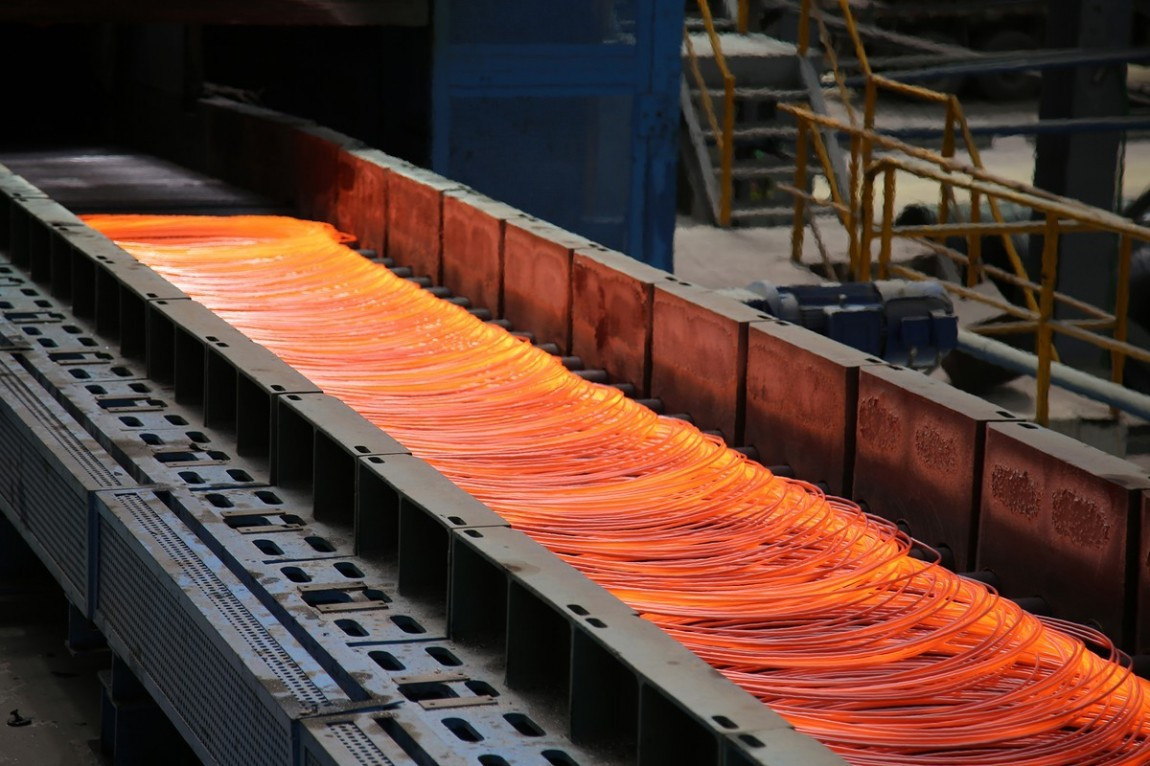
The requirement forms part of the EU’s broader response to persistent global steel overcapacity.
The objective of melt-and-pour traceability is to provide the European Commission with greater visibility into the actual production source of steel entering the Union and to strengthen the effectiveness of EU steel measures, including in relation to potential circumvention and trade diversion.
If trade authorities were to consider only the country from which the finished product was exported, or solely the country in which final downstream processing took place, the original source of the steel might be obscured by intermediate manufacturing operations.
Consider the following supply chain: Country A → slab production → Vietnam → rolling and downstream processing → European Union.
Looking only at the final exporter would identify Vietnam.
Melt-and-pour information, however, allows EU authorities to identify Country A as the jurisdiction in which the underlying steel was actually produced.
That additional level of visibility is particularly relevant where steel is processed through multiple jurisdictions before reaching the EU.
The new rules should therefore be viewed as part of the EU’s increasing regulatory interest in the substantive economic and production history of imported goods, rather than merely their immediate exporting country.
11. Melt-and-pour information may become more significant in future EU steel policy
At present, melt-and-pour information primarily serves a transparency and traceability function.
Nevertheless, businesses should pay close attention to the longer-term direction of the EU framework.
The collection of detailed upstream production data gives European authorities greater capacity to analyse how steel from different production jurisdictions enters the EU through complex international supply chains.
This means the regulatory significance of melt-and-pour information may evolve over time.
Businesses whose commercial models rely heavily on steel inputs from third countries should therefore avoid treating the requirement as merely another customs field to be completed.
It should instead be integrated into sourcing strategy, procurement controls, supplier due diligence and long-term market-access planning.
For Vietnamese steel companies, this may have consequences for future supplier selection.
Two suppliers offering commercially equivalent steel may no longer represent the same regulatory risk where one can provide a complete, independently verifiable melt-and-pour trail and the other cannot.
12. What should Vietnamese steel exporters do before 1 October 2026?
The new rules will apply from 1 October 2026, leaving businesses only a limited implementation period.
Vietnamese companies exporting steel or products potentially falling within Annex I of Regulation (EU) 2026/1384 should conduct a dedicated melt-and-pour readiness review.
The first step should be to verify whether the relevant goods fall within the scope of the EU Steel Regulation by reference to their precise CN or HS classification and product category, rather than relying only on commercial product descriptions.
Businesses should then map the relevant upstream steel supply chain, identifying the raw-material manufacturer, steelmaking mill, source of slabs, billets or ingots, country of melt and pour, heat number and any intermediate processing steps.
Existing Mill Test Certificates should be reviewed to determine whether they clearly identify the country of melt and pour, heat number, relevant mill, product description and batch or lot references, and whether those details are consistent with invoices, production records and shipment documentation.
Upstream supply contracts should also be reviewed. Where a Vietnamese manufacturer sources slabs, billets, coils or other steel inputs from third-party suppliers, the contract should impose a clear obligation on the supplier to provide accurate melt-and-pour information and supporting documentation, to retain relevant production records and to cooperate where customs verification is required.
Contracts with EU buyers and importers should similarly allocate responsibility for document preparation, delivery deadlines for compliance records, documentary standards, customs cooperation, liability for incorrect information, indemnification obligations and costs arising from detention, delay or rejection of a shipment.
Finally, businesses should consider establishing a central traceability system linking supplier, raw material, heat number, production batch, finished product and export shipment.
This should not be approached as a collection of isolated documents for individual shipments.
The objective should be to create a coherent and auditable melt-and-pour compliance file capable of responding to EU customs verification.
13. From proof of origin to proof of production
The EU’s new steel requirements illustrate a broader development in international trade regulation.
Historically, exporters were primarily required to answer:
Where does this product originate?
Increasingly, regulators are asking a second question:
Where and how was this product actually produced?
For steel, that question now includes:
Where was the steel melted and poured?
Similar regulatory developments can be observed in areas such as carbon emissions, forced labour, deforestation, environmental due diligence, critical raw materials and supply-chain traceability.
The broader implication is that market access is increasingly dependent not only on the legal classification of a finished product but also on the exporter’s ability to demonstrate the history of its production.
For Vietnamese businesses, this means that supply-chain transparency is moving from an internal management issue to a market-access requirement.
The strongest exporters will therefore not necessarily be those capable only of producing at the lowest cost.
Increasingly, competitive advantage will also depend on the ability to document, verify and defend the regulatory history of the goods being exported.
Commission Implementing Regulation (EU) 2026/1963 introduces a significant new compliance requirement for steel products imported into the European Union from 1 October 2026.
The Mill Test Certificate, the country of melt and pour and the relevant heat number will become central elements of the evidentiary framework supporting EU steel imports.
For Vietnamese businesses, three considerations are particularly important.
First, melt and pour should not be confused with preferential origin under the EVFTA. A product’s eligibility for preferential origin does not in itself satisfy the separate obligation to demonstrate where the underlying steel was originally melted and cast.
Second, although the EU importer formally bears the customs declaration obligation, the necessary evidence will largely have to be generated and maintained by manufacturers, exporters and upstream suppliers. The EU requirement will therefore inevitably affect contractual arrangements throughout the Vietnamese steel supply chain.
Third, the transitional ability to rely on alternative standalone documents should not be regarded as a long-term solution. From 1 October 2027, such documents will generally operate only as evidence complementary to the Mill Test Certificate.
Vietnamese steel exporters should therefore move beyond shipment-by-shipment document collection and develop a structured melt-and-pour compliance and supply-chain traceability framework covering procurement, production, customs documentation and contractual risk allocation.
The practical question for exporters is no longer simply whether a steel product is manufactured or exported from Vietnam.
Increasingly, the relevant question will be Can the business produce a complete, reliable and auditable record demonstrating how and where that steel was actually produced?
REFERENCES
- Commission Implementing Regulation (EU) 2026/1963 of 28 August 2026 on determining the type of evidence to be provided by importers to prove the country of “melt and pour”. Official Journal of the European Union, 31 August 2026.
- Regulation (EU) 2026/1384 of the European Parliament and of the Council of 17 June 2026 addressing the negative trade-related effects of global overcapacity on the Union steel market and amending Regulation (EU) 2020/2170.
- European Commission, Directorate-General for Trade and Economic Security, Commission sets type of evidence to be provided by importers to prove country of “melt and pour” of steel products subject to EU Steel Regulation, 31 August 2026.
- European Commission, Directorate-General for Trade and Economic Security, official materials on the EU Steel Regulation, tariff quota administration, out-of-quota duties and melt-and-pour traceability requirements.
- WTO and International Trade Center – VCCI, Vietnamese trade update concerning the EU evidence requirements for establishing the country of melt and pour of imported steel, September 2026.