

Customs Cooperation and Origin Control in Vietnam
As Vietnam strengthens its position in global supply chains, one reality has become clear: trade-remedy enforcement no longer ends at the Ministry of Industry and Trade.
Customs authorities, industrial regulators, and trade-remedy investigators increasingly operate in coordinated fashion — particularly in cases involving origin risk, supply-chain rerouting, and potential circumvention after anti-dumping or countervailing duties are imposed.

Foreign exporters now face a dual responsibility: proving fair pricing and proving authentic origin and production value.
The age of “paper compliance” is over. Vietnam is entering the era of substance-based verification.
Why Origin (and Traceability) Matters More Than Ever
Vietnam has become a key node in global manufacturing — and a key target for transshipment by companies trying to avoid tariffs in other jurisdictions.
To protect legitimate foreign investors and safeguard its status in global trade, Vietnam has elevated origin enforcement as a strategic priority.
This shift is driven by:
– Increasing anti-circumvention awareness globally
– Pressure from trading partners
– Rapid inflows of foreign-invested assembly operations
– Supply-chain relocation from China and beyond
– The need to protect Vietnam’s preferential FTAs
When one exporter abuses origin, everyone in that industry group becomes suspect. And Vietnam is determined not to become a “pass-through economy.”
Customs and Trade-Remedy Authorities — A Unified Approach
What exporters must understand: in Vietnam, trade-remedy investigations and customs origin checks now reinforce each other.
Examples include:
– Sharing transaction and shipment data
– Cross-checking HS classification and price declarations
– Comparing declared manufacturing capacity with export volumes
– Verifying consistency across tax, customs, and questionnaire data
– Auditing raw-material sourcing and BOM documentation
If numbers or explanations diverge across filings, credibility collapses — quickly.
What an Origin Inquiry Looks Like Today
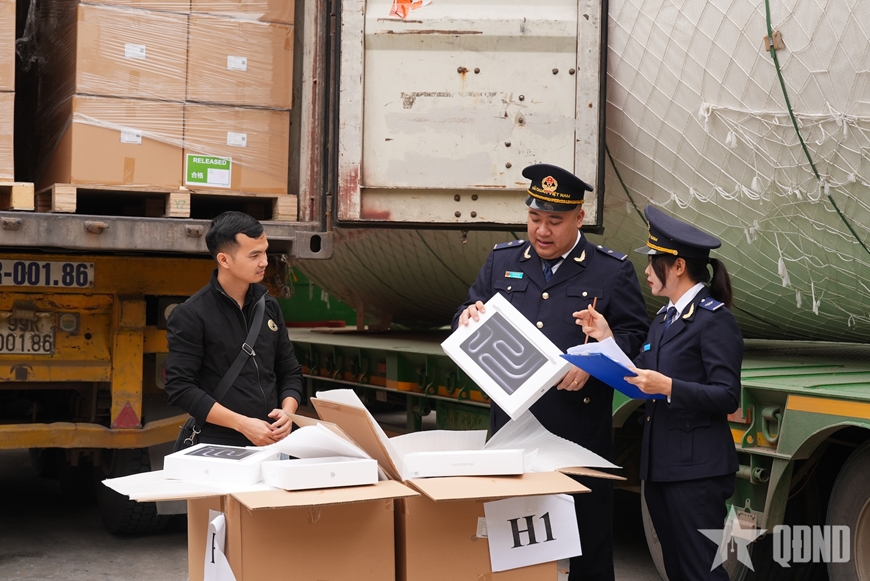
Investigations can involve:
– Document requests at customs clearance
– Post-clearance audits
– Site visits to production facilities (foreign factories included, via cooperation requests)
– Verification of factory capacity, workforce, and production lines
– Review of BOM and value-added ratios
– Cross-checks against export patterns from multiple jurisdictions
Origin is not a stamp. It is a story of production, backed by evidence.
Red Flags That Trigger Scrutiny
Exporters should be alert if they observe:
– Sudden spike in exports to Vietnam after duties elsewhere
– Routing through new intermediary locations
– Invoices from “trading hubs” with little manufacturing presence
– Unusually low labor or input cost ratios
– Rapid establishment of “new” producers with limited assets
– Requests from buyers to “adjust paperwork only”
These are not business opportunities — they are legal hazards.
How Responsible Exporters Protect Themselves
Leadership-minded exporters build traceability into their operations:
– Clear audit trails for all production inputs
– Documented value-added calculations
– Internal controls to prevent “document dressing”
– Proactive communication with Vietnamese partners
– Investment in compliance IT systems
– Voluntary internal reviews of Vietnam-bound supply chains
Compliance is no longer a cost — it is a competitive identity.

Why Local Counsel Matters Here
Customs lexicon, documentary form, and administrative tone are deeply local. Even when foreign counsel handles WTO strategy, Vietnamese counsel ensures filings, explanations, and audit behavior fit local practice:
– Correct format and certification
– Culturally appropriate response structure
– Clarity in explaining supply-chain mechanics
– Pre-audit training for staff and distributors
– Support during post-clearance customs engagement
In Vietnam, execution quality signals sincerity and professionalism.
The Economic Reality: Vietnam Rewards Integrity
Companies that treat Vietnam as a long-term manufacturing and market destination — not a transit lane — gain trust from authorities and customers alike.
Those who appear only when investigations begin often face higher walls.
In Vietnam, origin is not paperwork.
It is authenticity — proven through operations, not forms.
Foreign exporters who align with this principle do more than avoid duties — they build durable market presence, regulatory trust, and commercial resilience.
Read more other relavent articles:
- Legal Guide to the Sunset Review Process in Vietnam: What Foreign Exporters Need to Know 2026
- Countervailing Duty Investigations in Vietnam: Procedure, Expectations, and Strategic Guidance for Foreign Exporters
- Anti-Dumping Investigations in Vietnam: The Procedure and What Foreign Exporters Must Prepare For