


Litigation in Transition – From Judicial Function to Institutional Strategy
Vietnam’s litigation landscape is undergoing a profound transformation. Traditionally perceived as a reactive judicial mechanism governed by procedural law, litigation is increasingly shaped by broader institutional reforms, economic policy shifts, and the state’s strategic positioning within the global legal order.
This evolution reflects a deeper structural transition: litigation is no longer confined to the courtroom. It is becoming an integral component of Vietnam’s governance architecture—intersecting with administrative restructuring, investment policy, and digital transformation. As a result, the way disputes are initiated, conducted, and resolved is being fundamentally redefined.

Institutional Reconfiguration and the Fluidity of Jurisdiction
The administrative reforms implemented from 2025 mark one of the most consequential developments affecting litigation in Vietnam. The restructuring of local government—moving toward a streamlined, two-tier governance model—has not only altered the organization of state authorities but has also introduced a new level of fluidity into jurisdictional determination.
Under Vietnam’s litigation framework, jurisdiction is closely tied to the administrative structure, particularly in administrative and civil cases where identifying the competent authority is essential. As the administrative map is redrawn, courts and litigants alike face transitional uncertainties in determining proper defendants and territorial competence.
While the Civil Procedure Code 2015 continues to provide the formal basis for jurisdictional rules, its application in practice is increasingly influenced by institutional shifts that were not originally contemplated by the legislation. This creates a period of legal adjustment in which procedural certainty may temporarily give way to interpretative flexibility.
Specialized Courts and the Reorientation of Adjudication
A more visible and deliberate transformation is reflected in the establishment of specialized courts within Vietnam’s International Financial Centre (IFC), pursuant to the new legislative framework effective from 1 January 2026.
These courts represent a departure from the traditional model of adjudication in Vietnam. Unlike general courts operating under a unified procedural regime, IFC courts are designed to accommodate the complexities of international finance and cross-border investment disputes. Their procedural flexibility—including the potential application of foreign law, the use of English in proceedings, and the involvement of international judicial expertise—signals a shift toward a more globally integrated adjudicative system.
This development must be understood not merely as institutional diversification, but as a strategic repositioning. Vietnam is effectively entering the competitive market for international dispute resolution, where jurisdictions differentiate themselves based on efficiency, neutrality, and enforceability.
In this context, litigation is no longer solely an exercise of sovereign judicial authority. It becomes part of a broader legal infrastructure aimed at attracting and sustaining foreign investment.
The Rise of E-Litigation: Redefining Procedural Paradigms
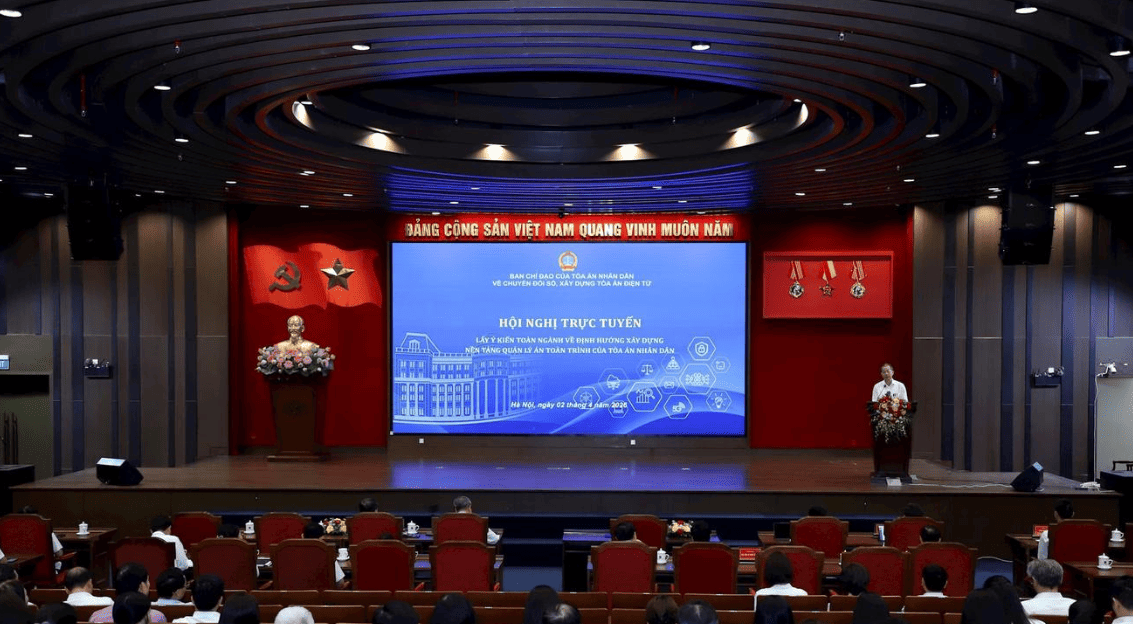
Perhaps the most transformative development in recent years is the emergence of electronic litigation (e-litigation), which is beginning to reshape the procedural architecture of dispute resolution.
While Vietnam’s procedural law—particularly the Civil Procedure Code 2015—was originally designed for a paper-based, in-person system, recent legal and policy developments have opened the door to digital proceedings. Within the IFC framework, electronic filing, virtual hearings, and digital evidence management are no longer conceptual possibilities but operational realities.
This transition carries profound implications.
First, it challenges the traditional territorial basis of jurisdiction. When proceedings can be conducted entirely online, the physical location of the court becomes less determinative, raising questions about the future relevance of geographically defined competence.
Second, it transforms evidentiary practices. The increasing reliance on electronic data, digital records, and cross-border information flows requires courts to engage with complex issues of authenticity, admissibility, and data integrity—areas that remain underdeveloped in Vietnam’s current evidentiary framework.
Third, it introduces new regulatory concerns, particularly in relation to cybersecurity and personal data protection. The interaction between litigation procedures and emerging data protection laws will likely become a defining issue in the coming years.
Regulatory Shifts and the Transformation of Dispute Patterns
Beyond procedural law, broader regulatory changes are reshaping the nature and frequency of disputes.
The Investment Law 2025 exemplifies a shift toward deregulation and post-licensing supervision. By reducing ex ante administrative controls, the law reallocates regulatory risk to the operational phase of business activities. This, in turn, increases the likelihood of disputes arising after investment implementation, particularly in areas such as compliance, licensing conditions, and regulatory enforcement.
Similarly, the development of legal frameworks for artificial intelligence and digital data introduces new categories of disputes that challenge traditional legal concepts. Questions of liability, causation, and evidentiary standards become more complex in a digital environment, requiring both courts and practitioners to adapt to novel legal realities.
These developments underscore a critical point: litigation is no longer merely a mechanism for resolving disputes. It is increasingly a reflection of systemic tensions arising from economic liberalization and technological change.
Toward a Hybrid Model: Convergence of Judicial and Arbitral Functions
An emerging trend in Vietnam’s dispute resolution landscape is the gradual convergence between litigation and arbitration.
Rather than operating as mutually exclusive mechanisms, courts and arbitral institutions are becoming increasingly interconnected. Courts play a supportive role in arbitration—granting interim measures, recognizing and enforcing arbitral awards—while arbitration incorporates elements of procedural flexibility traditionally associated with judicial systems.
This convergence is particularly relevant in complex, multi-party disputes, including serial disputes involving interconnected contractual relationships. In such cases, a single dispute resolution mechanism is often insufficient. Instead, a hybrid approach—combining litigation, arbitration, and even mediation—becomes necessary.
Vietnam’s evolving legal framework appears to be moving toward accommodating such hybrid models, reflecting global trends in dispute resolution.
Litigation as a Component of National Competitiveness
Looking ahead, it is evident that Vietnam is positioning its litigation system as part of its broader strategy for economic competitiveness.
The development of the IFC, the introduction of specialized courts, and the gradual alignment with international dispute resolution practices are not isolated reforms. They are components of a coordinated effort to enhance Vietnam’s attractiveness as an investment destination.
In this context, litigation transcends its traditional role as a public service. It becomes an element of institutional competitiveness, where jurisdictions are evaluated based on the efficiency, predictability, and credibility of their dispute resolution systems.
Navigating a System in Transformation
Vietnam’s litigation framework is entering a phase of structural transformation. The interplay between administrative reform, judicial innovation, and digitalization is reshaping both the practice and the perception of litigation.
For legal practitioners and businesses, the implications are significant. Litigation strategy can no longer be developed solely within the confines of procedural law. It must account for broader institutional dynamics, regulatory trends, and technological developments.
In this evolving environment, the key challenge is not simply to understand the law as it stands, but to anticipate how it is changing—and to adapt litigation strategies accordingly.
Read more other relevant articles:
- New Customs Regulations Effective February 1, 2026: Latest Legal Framework and Business Implications in Vietnam
- Recent changes in Investment law
- Recent Legal Changes in Vietnam and Their Impact on Litigation