

Vietnam in 2026 offers a rare combination of high economic growth, regulatory reform, and expanding market demand, making it one of the most attractive destinations for launching new business ventures in Asia. For foreign investors, however, identifying the right business idea is only one part of the equation. The real challenge lies in aligning that idea with Vietnam’s legal framework, market access conditions, and long-term strategic positioning.
This guide explores the most promising business sectors in Vietnam for 2026, while providing a legal perspective on how investors can structure and implement their business ideas effectively. It is designed not as a generic list of opportunities, but as a strategic roadmap that connects market potential with regulatory feasibility.
Vietnam’s Economic Context and Opportunity Landscape
Vietnam’s economic trajectory in 2026 reflects a transition from rapid expansion to sustainable, quality-driven growth. The government is actively steering the economy toward higher-value industries, digital transformation, and green development, while maintaining strong performance in traditional sectors such as manufacturing and trade.
At the same time, the domestic market is becoming increasingly important. A growing middle class, rising income levels, and urbanization are reshaping consumption patterns and creating demand for new products and services.
For investors, this means that business ideas in Vietnam must be evaluated from two perspectives: global competitiveness and local market relevance.
Manufacturing and Supporting Industries
Manufacturing remains a cornerstone of Vietnam’s economy, but its role is evolving. The focus is shifting toward integrated industrial ecosystems, where businesses participate in supply chains rather than operating in isolation.
Opportunities are particularly strong in supporting industries such as component manufacturing, packaging, and industrial services. These sectors benefit from the presence of multinational corporations and the ongoing diversification of global supply chains.
From a legal perspective, manufacturing activities are generally open to foreign investment, but may involve specific requirements related to environmental compliance, land use, and industrial zoning. Investors must also ensure that their business activities are properly classified to avoid licensing complications.
Technology and Digital Economy
The technology sector is one of the most dynamic areas of growth in Vietnam. Rapid digital adoption, combined with a young and tech-savvy population, is driving demand for software development, e-commerce platforms, fintech solutions, and digital services.
In 2026, the government continues to prioritize innovation, offering incentives for high-tech investments and encouraging the development of digital infrastructure. This creates a favorable environment for technology-driven business ideas.
However, legal considerations are particularly important in this sector. Issues such as data protection, cybersecurity, and cross-border data flows are becoming increasingly relevant. Investors must ensure compliance with evolving regulations while maintaining flexibility in their business models.
Consumer and Retail Market
Vietnam’s consumer market is expanding rapidly, driven by rising income levels and changing lifestyles. Demand for high-quality goods, international brands, and modern retail experiences is increasing, particularly in urban areas.
Business ideas in this sector range from retail chains and e-commerce platforms to lifestyle services and premium consumer products. The key to success lies in understanding local preferences and adapting global concepts to the Vietnamese market.
From a legal standpoint, retail activities may be subject to market access conditions, particularly for foreign investors. Licensing requirements and operational approvals can vary depending on the scale and nature of the business, making early legal planning essential.
Education and Professional Services
Education is a sector with strong long-term potential, driven by increasing demand for quality learning and international standards. Opportunities include language centers, vocational training, and specialized educational services.
Professional services, including consulting, legal, and financial advisory, are also experiencing growth as the business environment becomes more complex. Companies operating in Vietnam require increasingly sophisticated support in areas such as compliance, risk management, and corporate governance.
These sectors are often subject to specific licensing requirements and regulatory oversight. Investors must carefully assess eligibility conditions and ensure that their operations meet professional standards and regulatory expectations.
Logistics and Supply Chain Services
As Vietnam strengthens its position in global supply chains, demand for logistics and supply chain services is growing rapidly. Opportunities include warehousing, transportation, distribution, and integrated logistics solutions.
Infrastructure development is further supporting this sector, improving connectivity and reducing operational costs. For investors, logistics represents both a standalone business opportunity and a strategic complement to other investments.
Legal considerations in this sector may involve licensing requirements, foreign ownership limitations, and compliance with transportation and customs regulations. A well-structured approach is essential to ensure operational efficiency and regulatory compliance.
Renewable Energy and Green Economy
Sustainability is becoming a central theme in Vietnam’s economic strategy. The government is promoting renewable energy and environmentally friendly business models as part of its long-term development goals.
Opportunities in this sector include solar and wind energy projects, energy efficiency solutions, and green technologies. These investments align with global trends and benefit from policy support.
However, the regulatory framework for energy projects can be complex, involving multiple approvals and coordination with authorities. Investors must navigate these requirements carefully to ensure project viability.
Legal Framework for Business Implementation
Market Access and Conditional Business Lines
One of the most important legal considerations for any business idea in Vietnam is market access. While many sectors are open to foreign investment, some are subject to conditions relating to ownership, licensing, or operational requirements.
In 2026, the legal framework provides greater transparency, allowing investors to identify these conditions more easily. However, interpretation and application may still require careful analysis.
Investment Structuring and Company Formation
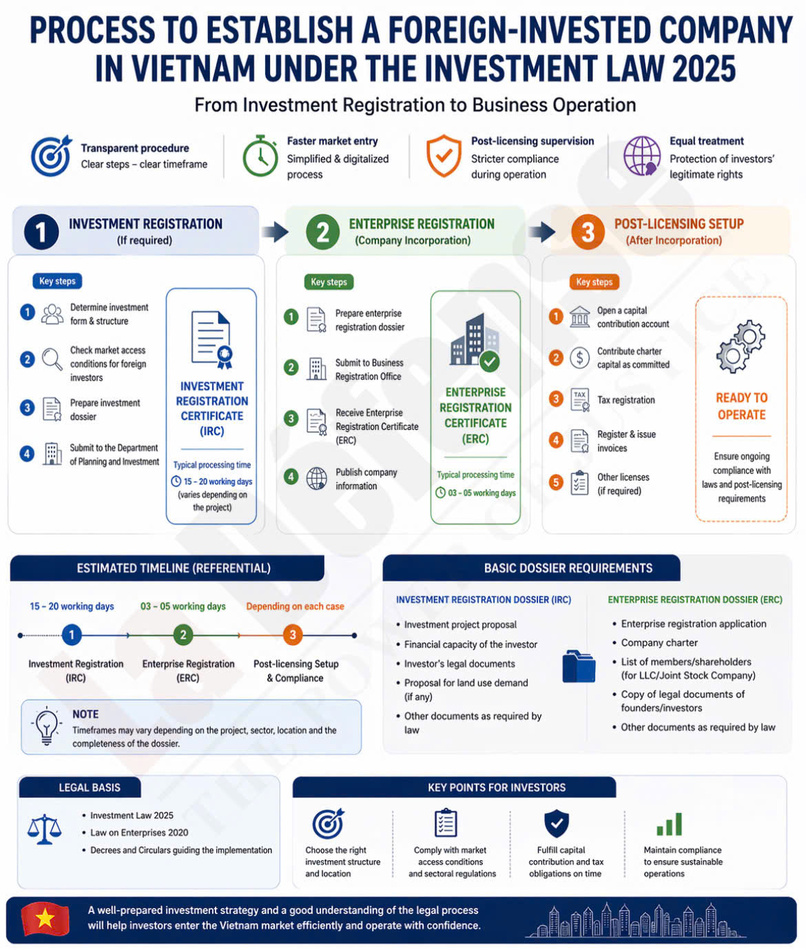
Choosing the right investment structure is critical for both compliance and efficiency. Investors may establish wholly foreign-owned companies, enter joint ventures, or acquire existing businesses.
The choice depends on factors such as market access conditions, capital requirements, and long-term strategy. The incorporation process itself has become more streamlined, supported by digitalization and administrative reforms.
Licensing and Operational Compliance
For many sectors, obtaining the necessary licenses is a key step before commencing operations. These approvals may require detailed documentation and coordination with multiple authorities.
In addition, companies must comply with ongoing obligations related to taxation, labor, and reporting. The shift toward post-licensing supervision means that compliance is an ongoing responsibility rather than a one-time requirement.
Strategic Considerations for Selecting Business Ideas
Choosing the right business idea in Vietnam requires a combination of market insight and legal understanding. Investors should consider not only the growth potential of a sector but also the regulatory environment and operational feasibility.
A successful strategy often involves identifying sectors where market demand, policy support, and legal accessibility intersect. This alignment reduces risk and enhances the likelihood of long-term success.
Investors should also adopt a flexible approach, as Vietnam’s economic and regulatory landscape continues to evolve. The ability to adapt to changes and respond to new opportunities is a key competitive advantage.
Business Opportunities and Legal Landscape in Vietnam 2026
Vietnam in 2026 presents a diverse and dynamic landscape for business ideas, ranging from traditional sectors such as manufacturing and logistics to emerging areas like technology and renewable energy.
The country’s economic growth, combined with regulatory reforms and expanding domestic demand, creates a strong foundation for investment. At the same time, the legal framework is becoming more transparent and efficient, while placing greater emphasis on compliance and operational integrity.
For foreign investors, the key to success lies in selecting business ideas that align with both market opportunities and regulatory conditions. A strategic approach that integrates legal planning, market understanding, and risk management is essential to unlocking Vietnam’s full potential.
La Défense – Strategic Legal Partner for Business Expansion in Vietnam
At La Défense, we assist foreign investors in transforming business ideas into successful operations in Vietnam. Our services cover the entire investment journey, from initial feasibility analysis and market entry strategy to company incorporation, licensing, and ongoing compliance.
We specialize in foreign direct investment advisory, corporate structuring, and regulatory compliance, with a strong focus on cross-border transactions and complex legal issues. Our approach is to provide solutions that are not only legally sound but also aligned with our clients’ commercial objectives.
With a deep understanding of Vietnam’s evolving legal framework and business environment, La Défense is well-positioned to support investors in identifying opportunities, managing risks, and building sustainable businesses in one of Asia’s most promising markets.
Disclaimer
The information provided in this article is for general informational and reference purposes only. It reflects the legal framework as of 2026 and does not constitute official legal advice, professional legal opinion, or a substitute for individualized legal counsel. Laws and regulations in Vietnam are subject to frequent changes, and the application of these rules may vary depending on the specific circumstances of each investment project.
We strongly recommend that you consult our experienced FDI lawyers or qualified legal advisors for a detailed assessment, risk analysis, and tailored solutions that best suit your business objectives and specific situation.
Read more other articles:
- Personal Data Protection Compliance in Vietnam 2026: Obligations for Businesses Under the New Data Protection Law
- Business Structures for Foreign Investors in Vietnam: Complete 2026 Guide – LLC, JSC, Branch, Representative Office & More
- Vietnam’s Legal Overhaul: Paving the Way for International Business
- A New Framework for Business Classification in Vietnam. Key Updates to the Economic Sector System Effective from November 15, 2025