

Small businesses and household enterprises (hộ kinh doanh) in Vietnam face increasing compliance requirements in 2026. With the shift to full declaration methods, mandatory e-invoicing, and higher penalties for errors, even minor mistakes can lead to fines, delayed refunds, or audits.This practical guide highlights the most common tax mistakes small businesses make in 2026 and provides actionable tips to avoid them — covering VAT, CIT, PIT, and tax administration.
Understand Your Tax Obligations as a Small Business in 2026
- VAT (Value Added Tax): Reduced rate of 8% (instead of 10%) continues until 31 December 2026 for most goods and services (with exclusions like finance, real estate, and telecom).
- Corporate Income Tax (CIT): Standard rate 20%. Small and medium enterprises (SMEs) may qualify for 15–17% preferential rates.
- Personal Income Tax (PIT): For household businesses and individual owners.
- Key Threshold (from 1 Jan 2026): Business households with annual revenue ≤ 500 million VND are exempt from VAT and PIT but must still report revenue annually.

Top 7 Common Tax Mistakes Small Businesses Make in 2026 (and How to Avoid Them)
1. Failing to Issue or Use E-Invoices Correctly
Many small businesses still use paper invoices or issue e-invoices late. From 2026, almost all transactions (including cash sales above certain thresholds) require electronic invoices connected to the tax authority’s system.
Tip: Register for e-invoices immediately via the General Department of Taxation portal. Use authorized software and issue invoices at the time of sale.
2. Mixing Personal and Business Expenses
Claiming personal expenses (family meals, personal travel, home utilities) as business deductions is one of the quickest ways to trigger an audit.
Tip: Maintain separate bank accounts and keep clear supporting documents (contracts, invoices, payment records) for every business expense.
3. Missing the 90-Day Capital Contribution or Incorrect Capital Recording (for LLCs)
Newly established small companies often miss the strict 90-day deadline to contribute charter capital.
Tip: Plan cash flow carefully and record contributions properly. Late contributions attract heavy fines and interest.
4. Incorrect VAT Input Credit Claims
Claiming VAT on inputs without valid invoices or for non-business purposes.
Tip: Only claim input VAT when you have proper e-invoices in the correct name of your business and the expense is used for taxable activities. Reconcile monthly.
5. Not Tracking the Revenue Threshold for Household Businesses
Many household businesses assume they are automatically exempt and fail to monitor when revenue exceeds 500 million VND.
Tip: Track revenue monthly. Once you exceed the threshold, switch to the declaration method immediately for the quarter in which it happens.
6. Late or Incorrect Tax Declarations and Payments
Missing monthly/quarterly deadlines for VAT and provisional CIT. Late payment interest is 0.03% per day.
Tip: Set calendar reminders. Use the electronic tax portal for all filings. The annual CIT finalization deadline is generally 90 days after fiscal year-end.
7. Poor Related-Party Transaction Documentation
Even small businesses with transactions involving family members or foreign owners must prepare basic transfer pricing documentation if thresholds are met.
Tip: Keep detailed contracts and proof of arm’s-length pricing.
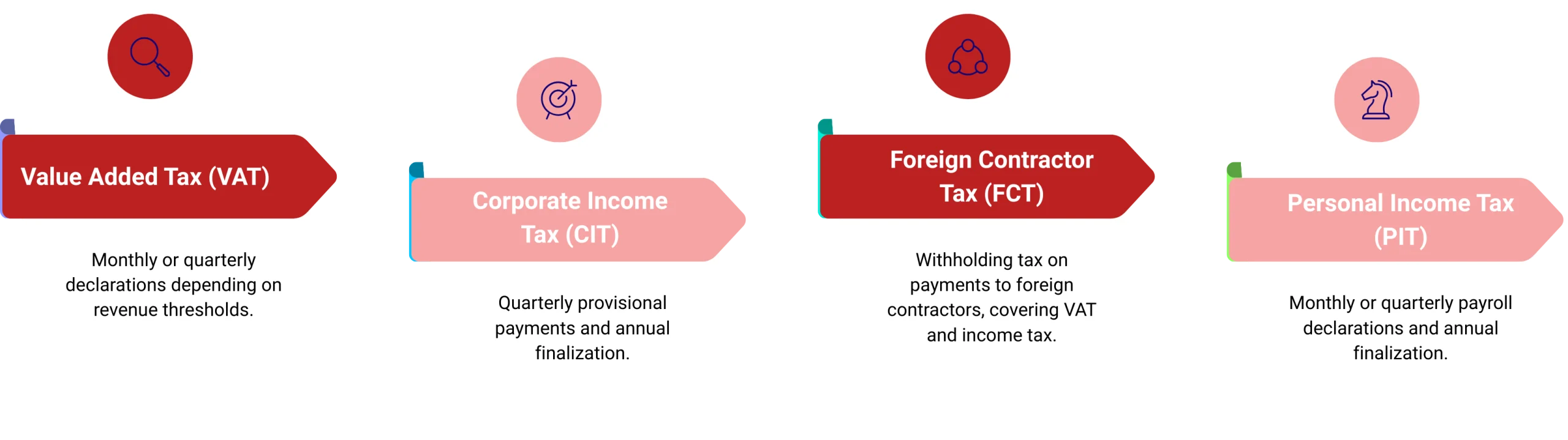
Practical Tax Tips for Small Businesses in 2026
| Tip | Benefit | Action Required |
| Use the 8% VAT rate | Lower costs passed to customers | Confirm your sector is eligible |
| Apply for SME incentives | Reduced CIT rate (15–17%) | Check revenue & employee criteria |
| Separate accounting records | Avoid expense rejection | Hire part-time accountant if needed |
| Reconcile taxes monthly | Faster VAT refunds | Use accounting software |
| Consult before large expenses | Prevent disallowed deductions | Get tax advice early |
Action Checklist for Small Business Owners
- Review your 2025 tax finalization before the March/April 2026 deadline.
- Upgrade to compliant e-invoicing software.
- Monitor revenue against the 500 million VND threshold.
- Maintain proper books even if below exemption thresholds.
- Consider converting from household business to a formal LLC for better protection and incentives.
Strong tax compliance not only helps you avoid penalties but also positions your business for easier access to bank loans, government support programs, and future growth.
The information in this article is for general reference only and reflects the tax framework as of 2026. It does not constitute official legal or tax advice. Tax rules can change and vary by specific circumstances.
We strongly recommend consulting our experienced tax advisors for tailored guidance and compliance support for your business.
Read more other relevant articles:
- How Do I Start a Business in Vietnam? Guide for Foreign Investors 2026
- Vietnam for Business 2026: Strategy Guide for Investors
- Vietnam Business Ideas 2026: Top Sectors & Legal Guide
- Business Structures for Foreign Investors in Vietnam: Complete 2026 Guide – LLC, JSC, Branch, Representative Office & More
- A New Framework for Business Classification in Vietnam. Key Updates to the Economic Sector System Effective from November 15, 2025