

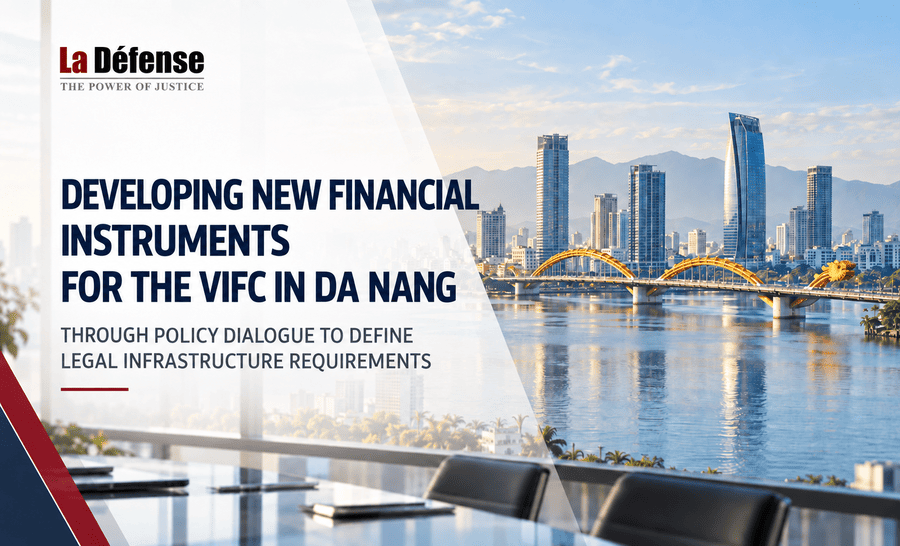
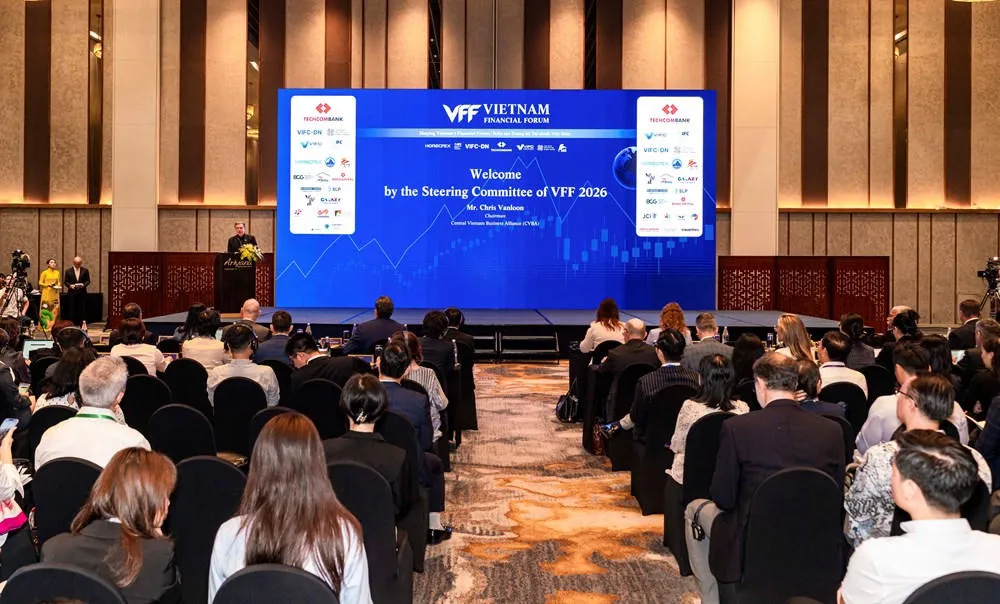
From 7 to 11 September 2026, the Executive Authority of the Vietnam International Financial Centre in Da Nang (VIFC-DN), in collaboration with the International Finance Corporation (IFC), a member of the World Bank Group, organised the Conference on Policy Dialogue and the Development of Financial Instruments.
The programme was a concrete step towards implementing the Memorandum of Understanding signed between VIFC-DN and IFC on 30 June 2026. Over five working days, representatives of regulatory authorities, international organisations, financial institutions, experts and the business community discussed groups of financial instruments capable of creating viable markets within the Vietnam International Financial Centre in Da Nang.
The discussions covered a broad range of subjects, including investment funds, secured transactions, supply chain finance and commodity trading, as well as tokenised real-world assets, digital assets, artificial intelligence infrastructure, carbon credits and climate finance. A common theme running through the programme was the need to move VIFC-DN beyond a policy concept and towards an ecosystem supported by specific financial products, international capital flows, actual transactions and risk-management mechanisms aligned with international standards.
From Establishing a Financial Centre to Designing Financial Products
The development of an international financial centre depends on more than physical infrastructure, investment incentives or the number of financial institutions operating within its boundaries. Its long-term viability will be determined by its ability to create products, markets and transactions capable of attracting investors, issuers, banks, investment funds and professional financial service providers.
Against this background, the conference highlighted the need to develop VIFC-DN around selected groups of products in which Da Nang possesses a comparative advantage and which are capable of practical implementation, rather than attempting to replicate all components of a traditional international financial centre at the same time.
Under the broader development strategy for the Vietnam International Financial Centre, six priority groups of products and services have been proposed:
- Investment funds and asset management;
- Tokenised real-world assets;
- International carbon credits;
- Commodity and derivatives trading infrastructure linked to trade, logistics and supply chain finance;
- Financial technology; and
- Bonds issued within the International Financial Centre.
These product groups have different levels of market and regulatory readiness. Accordingly, the proposed approach is to classify and introduce them according to a phased roadmap instead of launching all products simultaneously. This approach is consistent with the need to control risk, test new policies and gradually build market confidence.
Investment Funds and Mechanisms for Connecting International Capital
One of the conference’s initial areas of focus was the role of private investment funds, public investment funds and international financial institutions in mobilising and allocating capital.
For VIFC-DN, investment funds could provide an effective channel through which international capital may be connected with projects in sectors where Da Nang and the Central Vietnam region have substantial financing needs. These sectors include infrastructure, logistics, high technology, artificial intelligence, data centres, clean energy, green transition and urban development.
The ability to attract investment funds, however, does not depend solely on tax incentives. Professional investors will also consider the legal framework for the establishment and operation of funds, investment autonomy, cross-border capital mobilisation and repatriation, foreign exchange regulations, asset custody standards, disclosure obligations, investor rights and the mechanisms available for resolving disputes.
A competitive asset-management ecosystem should accommodate multiple forms of investment funds while maintaining appropriate standards of governance, anti-money laundering compliance, conflict-of-interest management and investor protection. The policy framework applicable to VIFC-DN must therefore strike an appropriate balance between market flexibility and the level of prudential protection required for an international financial centre.
Secured Transactions and the Emergence of New Asset Classes
The sessions held on 8 and 9 September devoted significant attention to secured transactions and the categories of assets that may be used to raise finance.
Under traditional lending models, credit facilities are generally secured by real property, machinery, vehicles, goods or receivables. The development of the digital economy and global supply chains, however, is creating new classes of assets and proprietary rights, including data, contractual rights, electronic invoices, electronic warehouse receipts, tokenised real-world assets, carbon credits and financial entitlements created or recorded through digital platforms.
The central legal issue is not merely whether a particular asset may be used as collateral. It also encompasses:
- The manner in which ownership and disposal rights are identified;
- The legal validity and evidential value of electronic records and instruments;
- The registration or public-notice mechanism applicable to security interests;
- The priority ranking among competing secured creditors;
- Asset valuation and collateral-management procedures;
- The ability to freeze, transfer and enforce against the collateral upon default; and
- The recognition of transactions, judgments and awards in matters involving foreign elements.
In relation to tokenised assets, the legal framework must also define the relationship between the digital unit recorded on a technological system and the underlying real-world asset. Holding a token has practical value only where the holder can enforce the corresponding rights against the underlying asset and is protected in the event that the issuer, custodian or platform operator becomes insolvent.
Asset tokenisation is therefore not merely a technological matter. It is fundamentally an issue of legal recognition of property rights, enforceability of transactions, custody and management of underlying assets, and investor protection.
Supply Chain Finance, Warehouse Finance and Warehouse Receipts
Supply chain finance and commodity trading were among the conference topics with particular practical relevance to Da Nang, especially given the city’s strategy to develop logistics, international trade and connectivity between Central Vietnam and the East–West Economic Corridor.
Under a supply chain finance model, financing is provided on the basis of actual trade transactions and movements of goods rather than being dependent solely on a company’s fixed assets. Invoices, receivables, purchase orders, supply contracts, inventory and warehouse receipts may therefore form the basis upon which businesses obtain financing.
A warehouse receipt may enable the owner of goods to establish the quantity and condition of goods held in storage and to use its rights over those goods for transfer, trading or security purposes. If warehouse receipts are digitalised and connected with banks, logistics operators, inspection bodies and commodity exchanges, they may shorten asset-verification procedures and reduce the cost of obtaining credit.
Such a mechanism can operate effectively only if certain fundamental conditions are satisfied:
- Warehouses and warehouse operators must be properly licensed, supervised and subject to clearly defined responsibilities;
- Goods must be inspected, classified and valued according to consistent standards;
- Mechanisms must prevent multiple warehouse receipts from being issued against the same consignment;
- Information regarding the goods, ownership and existing security interests must be capable of verification;
- Banks and secured creditors must have effective rights to access, control and realise the goods in the event of default; and
- Payment, insurance, logistics and dispute-resolution systems must be properly integrated.
The principal policy significance of this topic lies in its potential to broaden access to finance for small and medium-sized enterprises, exporters, agricultural businesses and other market participants that do not own substantial real estate to offer as collateral. Rather than allowing inventory to remain an illiquid resource, a properly regulated warehouse-receipt system can convert the economic value of stored goods into working capital.
Commodity Exchanges and Derivative Instruments
Commodity exchanges were considered in close connection with supply chain finance, warehousing, logistics and price-risk management.
A properly functioning exchange is more than a venue for buying and selling commodities. It also provides transparent price discovery, standardises commodity quality, supports payment and clearing, and enables businesses to use derivatives to manage price volatility.
For exporters, futures, forwards and other appropriate derivative instruments may help manage exposure to fluctuations in commodity prices, foreign exchange rates and input costs. For credit institutions, trading data and market prices can support the valuation of collateral and improve credit-risk management.
The development of such a market within VIFC-DN will nevertheless require clear rules on membership conditions, commodity standards, margin requirements, clearing and settlement, default management, market-manipulation surveillance and dispute resolution.
Tokenised Real-World Assets and Digital Financial Infrastructure
The inclusion of tokenised real-world assets in the programme reflects an intention to integrate traditional finance with distributed-ledger and blockchain-based technologies within VIFC-DN.
Potential assets for tokenisation may include real estate, commodities, invoices, warehouse receipts, bonds, receivables and other financial rights. The division of economic interests in an asset into smaller digital units may broaden investor access, increase transferability and reduce intermediary costs.
Tokenisation does not, however, displace the legal requirements applicable to the underlying asset. Where the underlying asset comprises real estate, goods or receivables, transactions must continue to comply with applicable rules governing ownership, transfer, registration, taxation, foreign exchange and third-party protection.
A regulatory sandbox may be considered for business models that are not yet comprehensively regulated under existing law. Any such sandbox should clearly define eligible participants, transaction limits, permitted asset classes, custody arrangements, disclosure obligations, technological-security standards and the procedures applicable upon the conclusion of the pilot programme or the occurrence of operational failure.
Artificial Intelligence Infrastructure and Data Centres
Artificial intelligence infrastructure was discussed not only as an investment sector but also as an operational component of an international financial centre.
Artificial intelligence may be applied to credit assessment, fraud detection, transaction monitoring, anti-money laundering controls, asset valuation, market analysis and the automation of compliance functions. Access to high-quality data and the ability to process information in near real time may substantially improve the efficiency of banks, investment funds and trading platforms.
The use of artificial intelligence in financial activities nevertheless raises important questions concerning data protection, cybersecurity, model explainability, liability for automated decisions and customers’ rights to challenge such decisions. VIFC-DN must therefore develop its technical infrastructure and data-governance framework in parallel, rather than focusing exclusively on computing capacity or the attraction of data-centre investments.
Carbon Credits, Carbon Finance and Climate Finance
From 10 September onwards, the programme proceeded with specialised discussions on global carbon markets, the quality and integrity of carbon credits, carbon finance, climate finance and possible models for a carbon exchange.
Carbon credits may generate additional revenue for projects involving emissions reduction, forest protection, ecosystem restoration, clean energy and low-carbon technology. The value of a carbon credit, however, depends directly on the ability to demonstrate that the relevant emissions reduction or removal has actually occurred, is measurable, is not counted more than once and does not result in material adverse environmental or social consequences.
Market integrity therefore became a central concept in these discussions. A credible carbon market should satisfy, at a minimum, requirements concerning:
- The additionality of the emissions-reduction activity;
- Scientifically sound measurement methodologies;
- Independent measurement, reporting and verification systems;
- The traceability and verifiability of underlying data;
- Mechanisms preventing double counting or double claiming;
- Management of reversal risks in carbon-removal projects;
- Protection of the rights and interests of local communities; and
- Transparent disclosure throughout the life cycle of a credit, from issuance and transfer to its ultimate retirement.
A significant message emerging from the discussions was that the credibility of a carbon exchange cannot be established through technology alone. The quality of the assets admitted to trading, the registry system, validation and verification standards, market surveillance and the ability to connect with international markets will ultimately determine the exchange’s integrity and commercial viability.
A Digital Carbon Exchange and the Tokenisation of Carbon Credits
Experts also considered digital carbon-exchange models and the potential tokenisation of carbon credits.
Technology may support transaction traceability, strengthen the integrity of records and facilitate more efficient settlement. A tokenised unit, however, has value only if it represents a valid carbon credit issued through a recognised registry and is not simultaneously transferred or used on another platform.
Any framework for tokenising carbon credits must therefore address the legal relationship between the original credit and the corresponding token; the authority to issue tokens; custody arrangements; procedures for transfer and retirement; platform-operator liability; and the cross-border recognition of transactions.
Da Nang has been oriented towards becoming a gateway for green financial products and may consider the development of a voluntary and internationally connected carbon-credit exchange. Any such initiative should nevertheless be coordinated with Vietnam’s national carbon-market framework, the rules governing international transfers of mitigation outcomes and Vietnam’s international climate commitments.
Key Policy Objectives
The publicly available information concerning the conference indicates five principal policy objectives.
First, to identify financial products capable of establishing a distinct competitive position for VIFC-DN, particularly in green finance, digital assets, commodity trading, supply chain finance and financial technology.
Second, to identify deficiencies and regulatory obstacles under the existing legal framework in relation to new asset classes, cross-border transactions, international capital mobilisation and the enforcement of security interests.
Third, to establish a regulatory sandbox in which new products may be tested within a defined and controlled environment before broader market implementation.
Fourth, to attract the participation of financial institutions, investment funds, international organisations and technology-infrastructure providers in order to generate actual transactions and market activity.
Fifth, to ensure that VIFC-DN develops on a transparent and secure basis, with appropriate risk-management capacity and alignment with international standards on anti-money laundering, investor protection and market integrity.
Principal Groups of Proposals Emerging from the Conference
Although no comprehensive final policy communiqué appears to have been published, the available conference materials and public reports make it possible to identify several significant groups of proposals.
First, a product-development roadmap should be prepared according to the level of regulatory and market readiness, with priority given to models capable of generating transactions and attracting market participants within a reasonably short period.
Second, the legal framework governing property rights and secured transactions should be updated to accommodate new asset classes, electronic instruments and assets arising within supply chains.
For warehouse finance and warehouse receipts, an integrated system should be developed covering registration, warehouse standards, inspection, insurance and data connectivity among warehouses, banks, logistics companies and trading platforms.
For tokenised assets, the legal framework should clearly identify the underlying asset, the rights of token holders, custody arrangements, disclosure requirements and the legal responsibilities of issuers and platform operators.
For the carbon market, priority should be given to credit quality, registry infrastructure and measurement, reporting and verification mechanisms before trading activities are expanded. A carbon exchange should be regarded as one component of the broader carbon-market ecosystem, rather than as an independent policy objective.
Finally, a permanent mechanism for cooperation among VIFC-DN, ministries and central authorities, IFC, financial institutions, businesses and professional organisations should be established so that recommendations arising from the consultation process can be translated into regulations, pilot programmes and specific projects.
Significance for the Development of VIFC-DN
The conference’s principal significance lies in the transition from the question of whether an international financial centre should be established to the more substantive questions of which products the centre will offer, which groups of investors it will serve and under which legal and regulatory mechanisms it will operate.
An international financial centre cannot be created through incentives alone. Market participants require legal certainty, enforceable contracts, effective protection of property rights, reliable insolvency and collateral-enforcement mechanisms, and dispute-resolution procedures that are prompt, independent and predictable.
Disputes involving products such as tokenised assets, electronic warehouse receipts and carbon credits may simultaneously involve contractual rights, ownership, data, technology, valuation and the laws of multiple jurisdictions. The dispute-resolution framework applicable within VIFC-DN should therefore be designed to reflect the cross-border nature and operational speed of international financial markets.
The policy dialogue organised by VIFC-DN and IFC contributed to identifying essential components of this emerging ecosystem. The next decisive step will be to translate the proposals into an operational legal framework, select products that are sufficiently mature for pilot implementation and generate the first transactions capable of demonstrating the model’s commercial and regulatory viability.
If these objectives can be achieved, VIFC-DN may establish a distinctive position based on Da Nang’s particular strengths in technology, innovation, green finance, logistics, commodity trade and the mobilisation of capital for sustainable transition.
Note: This article has been prepared on the basis of publicly available information concerning the conference. The proposals discussed during the programme are consultative in nature and represent policy orientations. They should not be construed as enacted legislation, legally binding rules or final decisions of the competent authorities.
Read more other relevant articles:
- Green Finance and Vietnam’s Ambition to Build an International Financial Centre: Opportunities, Challenges, and the Role of Legal Frameworks
- Emerging Strengths in Vietnam’s Labour Policy Framework for the International Financial Centre
- Vietnam Approves Legal Framework to Establish International Financial Centers in HCM City & Da Nang: Strategic Breakthrough to Attract Global Capital