

Public–Private Partnership (PPP) Investment in Vietnam: Legal Framework, Procedures, and Key Considerations for Foreign Investors
Public–Private Partnership (PPP) is increasingly recognized as a strategic mechanism in Vietnam to mobilize private capital for infrastructure development. With pressing demands for modern infrastructure in transportation, energy, healthcare, and education, but limited state budget capacity, PPP projects serve as a “bridge” between the public and private sectors.

For foreign investors, PPP provides opportunities to participate in long-term, large-scale projects in Vietnam’s rapidly growing economy. However, the legal structure of PPP projects is highly complex. Investors need to understand the latest laws, procedures, and risks in order to structure their investments properly and safeguard their interests.
Legal Framework
PPP investment in Vietnam is currently governed by:
- Law on Investment under the Public–Private Partnership Model (Law on PPP No. 64/2020/QH14) – effective from January 1, 2021.
- Decree No. 243/2025/ND-CP, detailing a number of provisions of the Law on Investment under the Public–Private Partnership model.
- Relevant laws, including the Law on Investment 2025, Law on Enterprises 2020, Law on Bidding 2023, Land Law 2024, Law on State Budget, and Law on Public Debt Management.
The enactment of the Law on PPP marked a major step forward in creating a unified, transparent legal framework, replacing the fragmented regulations under various decrees previously in force.
Sectors Eligible for PPP Investment
The Law on PPP 2020 restricts projects to essential sectors to ensure alignment with national development priorities. These include:
- Transportation: road, railway, seaport, airport infrastructure.
- Power grids and power plants (excluding small hydropower).
- Irrigation, clean water supply, drainage, wastewater treatment, and waste management.
- Healthcare and education.
- Information technology infrastructure.
This limitation focuses private capital on projects with significant socioeconomic impact, while ensuring effective state oversight.
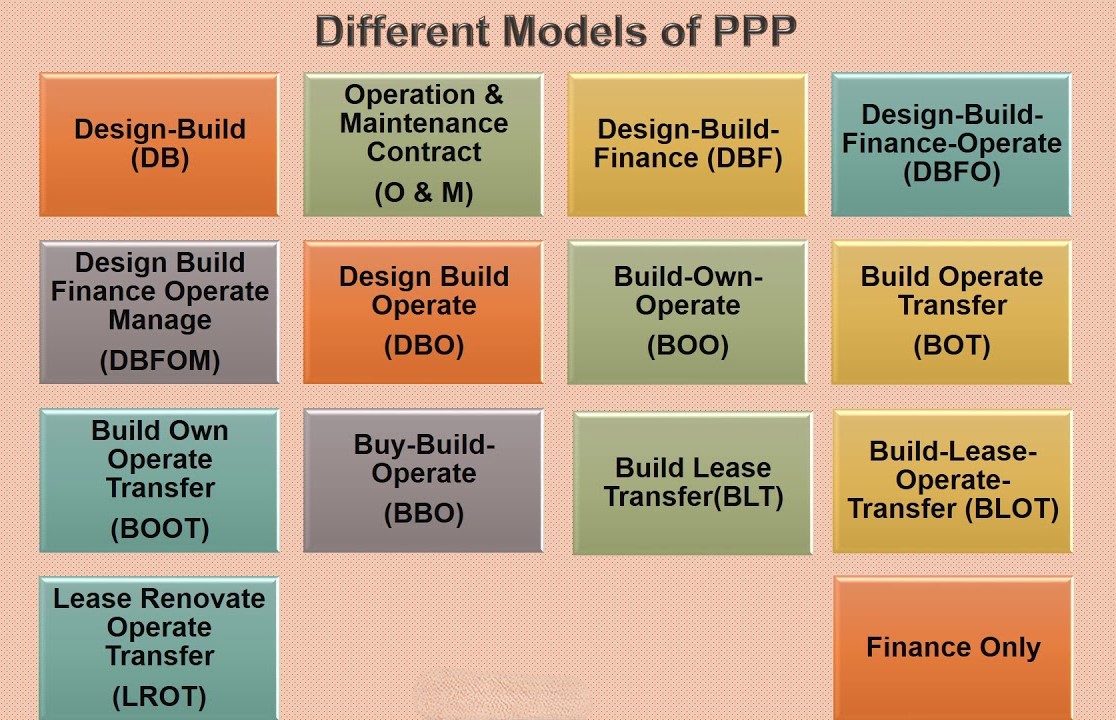
Types of PPP Contracts
Vietnamese law recognizes several PPP contractual models:
- BOT (Build – Operate – Transfer): the investor builds and operates the project, then transfers it to the State after an agreed period.
- BTO (Build – Transfer – Operate): the investor builds and transfers to the State, then is granted the right to operate.
- BOO (Build – Own – Operate): the investor builds, owns, and operates the project without transfer obligations.
- O&M (Operate – Maintain): the investor operates and maintains an existing facility.
- BTL / BLT (Build – Transfer – Lease / Build – Lease – Transfer): models combining transfer and lease arrangements between the State and the investor.
Each contract type presents distinct risk-sharing and revenue arrangements, which must be carefully negotiated to align with the investor’s strategic and financial goals.
Project Development Process
- Approval of Investment Policy
The process begins with the preparation of a project proposal by a competent state authority. After review and appraisal, the investment policy is approved by the Prime Minister or the provincial People’s Committee, depending on the project scale.
- Feasibility Study
The competent authority prepares a feasibility study report, analyzing project necessity, financial viability, risk allocation, and draft contract terms.
- Selection of Investor
Investors are selected primarily through open bidding procedures under the Law on Bidding. In exceptional cases, direct appointment of investors may be allowed but subject to strict legal conditions.
- Contract Signing and Implementation
The selected investor establishes a project enterprise (PPP project company), executes the PPP contract with the authority, and proceeds with implementation.
- Operation, Supervision, and Transfer
The investor operates the project for the duration specified in the contract, after which transfer obligations apply (except for BOO contracts).
Financial Mechanisms and Investment Guarantees
One of the most critical features of PPP projects is the revenue risk-sharing mechanism. Under the Law on PPP 2020:
- If actual revenue falls below 75% of the contracted forecast due to changes in law or policy, the State will share up to 50% of the shortfall.
- Conversely, if actual revenue exceeds 125%, the investor must share 50% of the excess with the State.
Additional investor incentives include:
- Land use rights and possible exemptions/reductions in land rental.
- Tax incentives, including corporate income tax and import tax reductions.
- Access to credit and potential state guarantees for certain obligations of the contracting authority.
This framework aims to balance commercial returns with public interest, encouraging private capital inflows while mitigating investor concerns over regulatory risk.
Legal and Practical Risks
Foreign investors must be aware of inherent risks, including:
- Legal and Policy Risk: Frequent changes in laws and regulations may alter project economics.
- Financial Risk: Difficulty in raising long-term financing, given extended payback periods and reliance on user demand.
- Contractual Disputes: PPP contracts are highly complex, requiring careful drafting of risk allocation and dispute resolution mechanisms.
- Social Risk: Public opposition, especially concerning user fees in BOT projects, can disrupt operations.
A well-negotiated contract, supported by robust due diligence, is essential to mitigate these risks.

Dispute Resolution
The Law on PPP provides multiple dispute resolution options:
- Vietnamese courts with jurisdiction.
- Domestic arbitration (e.g., Vietnam International Arbitration Center – VIAC).
- International arbitration, if the contract involves a foreign element.
Foreign investors generally prefer international arbitration for neutrality and enforceability, given Vietnam’s status as a party to the New York Convention 1958.
Practical Considerations for Foreign Investors
- Choice of contract model: BOO or BOT structures may offer more predictable revenue streams for foreign investors compared to BTL/BLT models.
- Financing structure: Syndicated loans, export credit agencies, and multilateral institutions often play a crucial role in PPP financing.
- Government support: Carefully assess the availability and enforceability of state guarantees, particularly in revenue risk and foreign currency convertibility.
- Exit strategy: Clarify mechanisms for share transfer, assignment of rights, or early termination compensation in the contract.
La Défense’s Legal Services
As a law firm with extensive expertise in investment and dispute resolution, La Défense offers comprehensive services for foreign investors engaging in PPP projects in Vietnam:
- Advising on the selection of appropriate PPP contract type.
- Conducting legal due diligence on the project, land use, and compliance obligations.
- Drafting and negotiating PPP contracts with competent authorities.
- Advising on taxation, land, finance, and capital structuring.
- Representing investors in arbitration or litigation in case of disputes.
La Défense’s lawyers combine local legal expertise with an international outlook, ensuring that investors are well-protected in both contractual and regulatory dimensions.
PPP is an attractive model for foreign investors to participate in Vietnam’s infrastructure development. It offers long-term investment opportunities in critical sectors while balancing risks through legal mechanisms such as revenue-sharing and state support.
However, PPP projects are inherently complex, involving multifaceted risks in law, finance, and operations. Success requires not only a strong commercial plan but also a thorough understanding of Vietnam’s evolving legal framework.
Partnering with an experienced legal advisor like La Défense provides investors with the clarity, protection, and confidence needed to navigate Vietnam’s PPP landscape and achieve sustainable investment outcomes.
Read more other relevant articles:
- Protecting International Franchise Brands in Vietnam: Legal Guidance and Key Considerations for Foreign Investors
- Legal Tips for Foreign Investors in Hanoi
- Customs Cooperation and Origin Verification in Vietnam: The New Compliance Frontier for Foreign Exporters