

Vietnam in 2026 stands as one of the most strategically positioned investment destinations in Asia. Beyond its well-known advantages—competitive labor costs, favorable geography, and strong trade integration—the country is undergoing a deeper transformation toward a rules-based, innovation-driven, and investor-oriented economy.
For foreign investors, Vietnam is no longer a “market of entry” but increasingly a market of positioning. The question is not simply how to enter, but how to structure investments, align with regulatory evolution, and capture long-term value in a rapidly maturing business environment.
This strategy guide provides a comprehensive perspective on Vietnam’s investment landscape in 2026, combining economic outlook, regulatory developments, and practical strategic considerations for international investors.

Vietnam’s Strategic Position in the Global Economy
Vietnam’s rise is closely linked to global economic restructuring. As supply chains diversify and companies seek resilience, Vietnam has become a critical node in regional and global production networks.
The country’s extensive network of free trade agreements, including those with major economies, allows businesses operating in Vietnam to access global markets under preferential conditions. This creates a dual advantage: Vietnam is both a production base and a gateway market.
At the same time, Vietnam’s domestic economy is expanding. Rising income levels, urbanization, and digital adoption are transforming it into a consumption-driven market. This combination of export strength and domestic demand creates a balanced economic foundation that enhances long-term investment attractiveness.
Regulatory Evolution and Investment Climate in 2026
A Shift Toward a Facilitative Legal Framework
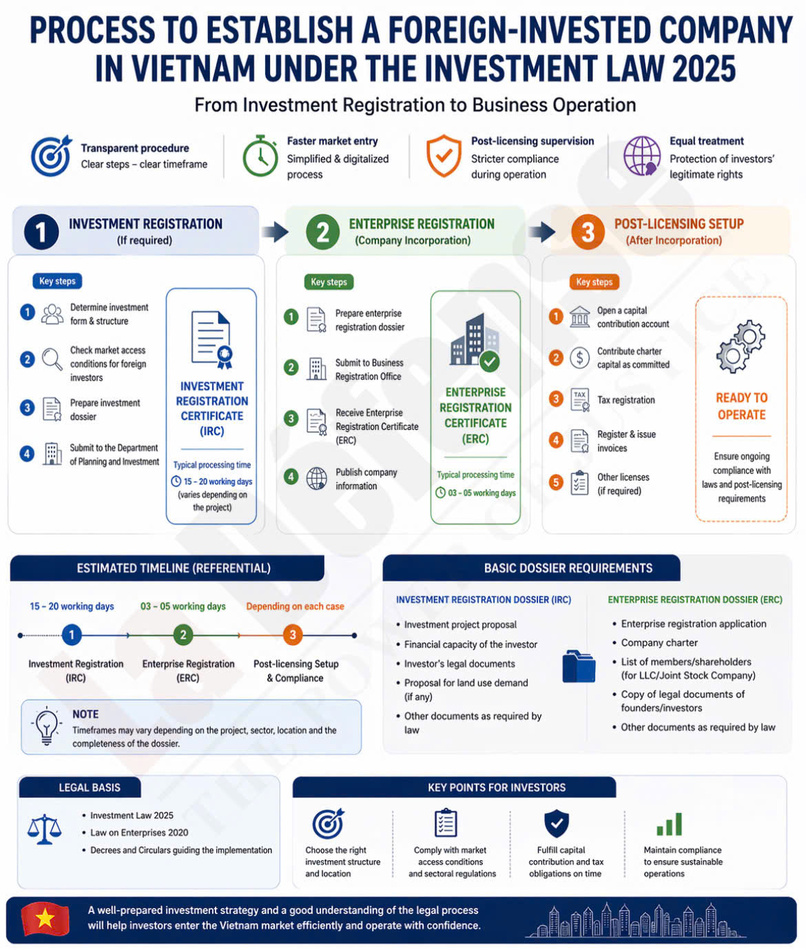
The most important development for investors in 2026 is the evolution of Vietnam’s legal environment. The Law on Investment 2025 and its guiding regulations reflect a clear policy direction: reducing administrative barriers while strengthening regulatory oversight during operation.
This shift is particularly relevant for foreign investors. Entry procedures have been simplified, timelines shortened, and certain conditions clarified or removed. However, compliance obligations during the operational phase have become more structured and closely monitored.
This model aligns Vietnam with international regulatory practices, where ease of entry is balanced by ongoing supervision.
Transparency and Predictability in Market Access
Vietnam has made significant progress in clarifying market access conditions for foreign investors. Restrictions relating to ownership, licensing, and sectoral limitations are increasingly codified, reducing uncertainty and improving predictability.
For investors, this means that feasibility assessments can be conducted with greater accuracy at an early stage. However, interpretation and application may still vary depending on the authority involved, making local legal insight essential.
Digital Transformation of Administrative Processes
Digitalization is reshaping the interaction between businesses and authorities. From company registration to tax compliance, electronic systems are becoming the standard.
This transformation enhances efficiency and reduces administrative friction, but it also increases transparency. As a result, companies must ensure that their documentation and operations are fully consistent and compliant.
Strategic Investment Themes in Vietnam
Manufacturing Beyond Cost Advantage
Vietnam’s manufacturing sector remains a cornerstone of its economy, but its strategic value is evolving. The focus is shifting from low-cost production to integrated industrial ecosystems and higher value-added activities.
Investors are increasingly participating in supply chains that involve not only assembly but also design, research, and supporting industries. This creates opportunities for companies with technological capabilities and long-term investment horizons.
Technology and Innovation as Growth Catalysts
The Vietnamese government is actively promoting investment in technology and innovation. Sectors such as artificial intelligence, digital platforms, and fintech are receiving policy support and regulatory attention.
Vietnam’s young, educated workforce provides a strong foundation for technology-driven growth. For investors, this presents an opportunity to enter a market that is still developing but has significant upside potential.
Infrastructure and Logistics as Strategic Enablers
Infrastructure development remains central to Vietnam’s economic strategy. Investments in transportation, logistics, and energy are designed to support industrial expansion and improve connectivity.
For foreign investors, infrastructure is not only a sector for direct investment but also a critical factor influencing the success of other business activities.
Consumer Market Expansion
Vietnam’s consumer market is growing rapidly, driven by a rising middle class and changing lifestyle patterns. Demand for high-quality goods and services is increasing, particularly in urban areas.
This creates opportunities across a wide range of sectors, including retail, healthcare, education, and lifestyle services. Investors who understand local preferences and adapt their strategies accordingly can capture significant market share.
Structuring Investment for Efficiency and Compliance
Choosing the Right Entry Strategy
The choice of entry structure is a key strategic decision. Foreign investors can establish wholly owned subsidiaries, enter joint ventures, or acquire existing companies. Each approach has different implications in terms of control, regulatory requirements, and risk exposure.
In 2026, the regulatory framework provides greater flexibility, allowing investors to structure their entry in ways that optimize both efficiency and compliance. However, this flexibility requires careful legal planning to ensure that the chosen structure aligns with market access conditions and long-term objectives.
Aligning Investment with Regulatory Conditions
Compliance with market access conditions is essential for successful investment. These conditions may relate to ownership limits, licensing requirements, or operational standards.
Investors should integrate regulatory considerations into their strategic planning from the outset. This not only reduces legal risk but also enhances operational efficiency.
Managing Legal and Operational Risks
Risk management is a central component of any investment strategy. In Vietnam, risks often arise from regulatory interpretation, documentation inconsistencies, and compliance gaps.
A proactive approach to risk management involves regular legal reviews, clear internal governance structures, and consistent alignment between business operations and regulatory requirements.
Operational Considerations for Foreign Businesses
Taxation and Financial Compliance
Vietnam’s tax system is relatively stable and predictable, but strict compliance is required. Companies must establish proper accounting systems, comply with tax reporting obligations, and ensure consistency in financial documentation.
The increasing use of digital tax systems enhances transparency and enforcement, making compliance a critical operational priority.
Labor and Human Capital Strategy
Vietnam’s workforce is one of its key strengths, offering a combination of cost efficiency and growing skill levels. However, labor compliance remains an important consideration.
Employers must adhere to regulations on employment contracts, social insurance, and working conditions. For foreign employees, additional requirements such as work permits and immigration compliance apply.
A well-structured human capital strategy can significantly enhance operational efficiency and competitiveness.
Corporate Governance and Decision-Making
Effective governance is essential for managing operations and mitigating risk. Companies must establish clear decision-making processes, define roles and responsibilities, and ensure accountability.
For foreign-invested enterprises, governance structures should be designed to balance control with local operational realities, particularly in joint venture arrangements.
Emerging Risks and Strategic Challenges
External Economic Uncertainty
Vietnam’s integration into global trade networks exposes it to external economic fluctuations. Changes in global demand, trade policies, and geopolitical dynamics can impact business performance.
Investors should incorporate these factors into their strategic planning and maintain flexibility in their operations.
Regulatory Implementation and Local Practice
While the legal framework is becoming more transparent, its implementation may vary. Differences in interpretation between authorities can create challenges, particularly for complex projects.
Engaging with experienced legal advisors and maintaining proactive communication with regulators can help mitigate these risks.
Compliance and Enforcement Trends
The shift toward post-licensing supervision means that compliance is an ongoing responsibility. Authorities are increasingly focused on monitoring business operations and enforcing regulations.
Companies that fail to maintain compliance may face administrative penalties or operational disruptions.
Vietnam’s Business Strategy Landscape in 2026
Vietnam in 2026 offers a unique combination of growth potential, regulatory evolution, and strategic opportunity. The country is transitioning from a cost-driven investment destination to a more sophisticated, value-oriented economy.
Key trends such as supply chain realignment, digital transformation, and rising domestic consumption are reshaping the investment landscape. At the same time, legal reforms are enhancing transparency and facilitating market entry, while increasing the importance of compliance during operation.
For foreign investors, success in Vietnam requires more than capital investment. It requires a strategic approach that integrates market understanding, legal compliance, and long-term positioning. Those who align their strategies with Vietnam’s evolving economic and regulatory environment will be best positioned to capture sustainable growth opportunities.
La Défense – Strategic Legal Partner for Foreign Investors in Vietnam
At La Défense, we support international investors in navigating Vietnam’s dynamic business environment with confidence and precision. Our services are designed to accompany clients throughout the entire investment lifecycle, from market entry strategy and investment structuring to corporate establishment, regulatory compliance, and dispute resolution.
Our core strength lies in foreign direct investment advisory, corporate law, and complex dispute management, with a strong focus on cross-border transactions. We understand that each investment project is unique, requiring tailored legal solutions that balance regulatory requirements with commercial objectives.
By combining deep legal expertise with practical business insight, La Défense delivers solutions that are both legally sound and strategically effective. We are committed to helping our clients minimize risks, optimize investment structures, and achieve long-term success in Vietnam.
As a trusted partner for international businesses, La Défense brings a global perspective and a deep understanding of Vietnam’s legal landscape, ensuring that our clients are well-positioned to seize opportunities in one of Asia’s most dynamic markets.
Disclaimer
The information provided in this article is for general informational and reference purposes only. It reflects the legal framework as of 2026 and does not constitute official legal advice, professional legal opinion, or a substitute for individualized legal counsel. Laws and regulations in Vietnam are subject to frequent changes, and the application of these rules may vary depending on the specific circumstances of each investment project.
We strongly recommend that you consult our experienced FDI lawyers or qualified legal advisors for a detailed assessment, risk analysis, and tailored solutions that best suit your business objectives and specific situation.
Read more other relavant articles:
- How to Start a Small Business in Vietnam (Step-by-Step) – 2026 Guide
- Vietnam Business Ideas 2026: Top Sectors & Legal Guide
- Personal Data Protection Compliance in Vietnam 2026: Obligations for Businesses Under the New Data Protection Law
- The Growing Demand for Private Legal Counsel Among Business Owners in Vietnam