
In 2026, Vietnam continues to attract significant foreign direct investment (FDI) with its dynamic economy, strategic location, and improving business environment under the amended Law on Investment 2025 (effective March 1, 2026, with conditional sectors from July 1, 2026) and the Amended Law on Enterprises 2025 (effective July 1, 2025). However, foreign investors often face ownership restrictions in conditional sectors. A nominee director arrangement—where a local Vietnamese individual or entity serves as the legal representative or director on paper while the foreign beneficial owner retains control—has historically been used as a workaround.
This 2026 guide examines the legal framework, heightened risks due to beneficial ownership (BO/UBO) disclosure rules, practical implications, and compliant alternatives. Relying on informal nominee structures is increasingly perilous. Investors must prioritize transparency and professional structuring to avoid severe consequences.

What Is a Nominee Director in Vietnam?
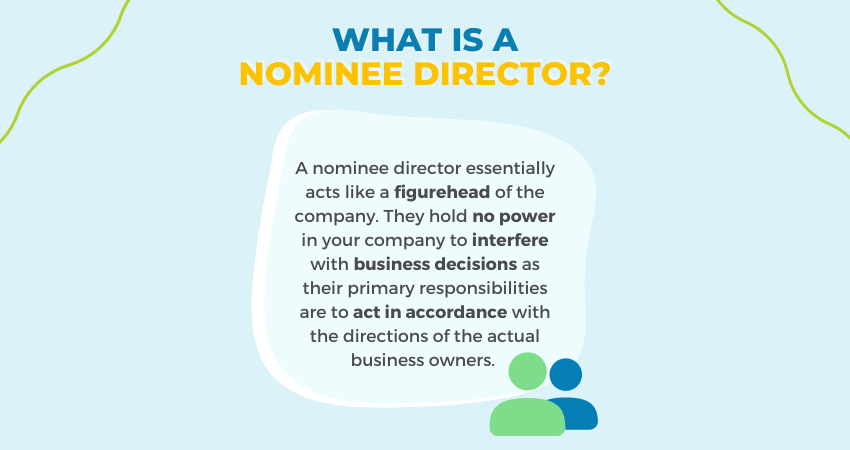
A nominee director (or legal representative) in Vietnam is a local resident whose name appears on the Enterprise Registration Certificate (ERC), Investment Registration Certificate (IRC, where applicable), and other official documents as the company’s director or legal representative. This individual acts formally for the company but follows instructions from the actual beneficial owner, typically a foreign investor.
The nominee signs documents, handles regulatory filings, opens bank accounts, and manages local compliance, while the foreign investor provides capital, makes strategic decisions, and receives economic benefits through private agreements like powers of attorney (POA), declarations of trust, or side contracts.
Key Reasons Foreign Investors Consider Nominee Directors
- Bypassing foreign ownership caps: In conditional business lines (reduced to 199 sectors from July 2026 under the new Investment Law), foreign ownership is limited or prohibited (e.g., certain logistics, advertising, real estate services, or national security-related activities). A nominee allows apparent local control.
- Local residency requirement: Every Vietnamese company must have at least one legal representative residing in Vietnam (Law on Enterprises).
- Administrative convenience and privacy: Locals handle bureaucracy and language barriers; the beneficial owner’s identity stays off public records initially.
- Market entry speed: Faster setup in restricted sectors without full regulatory scrutiny.
Important note for 2026: While nominee arrangements are not explicitly outlawed, they operate in a legal gray area. Vietnamese law does not recognize trusts or nominee structures in the common law sense. Courts and authorities view the named individual as the true legal owner and representative.
Legal Framework Governing Nominee Directors in 2026
Vietnam’s corporate and investment laws have evolved significantly for greater transparency, aligning with international anti-money laundering (AML) standards (post-FATF grey list pressures).
Core Laws and Recent Amendments
- Law on Enterprises 2020, as amended 2025 (effective July 1, 2025): Introduces mandatory beneficial owner disclosure. Companies must declare individuals who own/control ≥25% of charter capital/voting rights or exercise actual control (e.g., over appointment of directors, legal representatives, or key decisions). Updates required within 10 days; records kept for 5 years post-dissolution.
- Law on Investment 2025 (effective March 1, 2026; conditional list July 1, 2026): Allows termination of projects based on “sham” or false civil transactions used to circumvent restrictions (echoing Article 48 of prior law). Streamlines procedures but tightens enforcement against disguised foreign control. Foreign investors can establish entities before IRC in some cases.
- Civil Code 2015: Sham transactions (designed to conceal another) are invalid (Articles 117, 138). Nominee agreements risk being voided.
- Anti-Money Laundering regulations and Decree 168/2025/ND-CP: Require UBO reporting to business registration authorities. Banks apply stricter KYC.
2026 Status: Nominee structures must comply with UBO disclosure. Declaring the foreign beneficial owner in a restricted sector can trigger reviews or termination. Non-disclosure risks fines, investigations, or blacklisting. Existing companies must update upon any registration change.
Major Legal Risks of Using a Nominee Director in Vietnam (2026)
The unofficial nature of nominee arrangements amplifies risks under the new transparency regime.
1. Invalidity of Private Agreements and Loss of Control
Courts frequently deem nominee POAs, trust declarations, or side agreements as sham transactions and invalidate them. The nominee remains the legal owner, potentially seizing assets, selling shares, or dissolving the company. Foreign investors have limited recourse, especially in prohibited/restricted sectors where hidden foreign ownership is unenforceable.
2. Project Termination and Regulatory Sanctions
Authorities can revoke IRCs/permits and terminate projects if nominees circumvent ownership rules. Under the 2025 Investment Law, sham transactions provide explicit grounds. This leads to forced closure, asset freezes, and operational halts.
3. Personal Liability for the Nominee
The nominee bears full personal responsibility for debts, taxes, regulatory breaches, labor issues, and criminal acts (e.g., tax evasion, fraud). They cannot deflect blame to the beneficial owner. Risks include massive tax bills on perceived personal income, exit bans for company tax debts, and criminal prosecution.
4. Financial, Tax, and AML Risks for Investors
- Undisclosed UBOs trigger administrative fines and potential criminal probes.
- Fund transfers to foreigners may be recharacterized, leading to withholding taxes or evasion charges.
- Banks scrutinize nominee structures, delaying or blocking transactions.
5. Dispute Resolution Challenges
Litigation is lengthy; outcomes favor the registered owner. Criminal complaints often fail as civil matters. Investors may recover only partial capital at best.
Quantified Exposure (2026): Fines can reach hundreds of millions VND; project termination means total investment loss. Reputational damage and blacklisting hinder future Vietnam activities.
Practical Implications and Compliance Requirements in 2026
All companies must maintain and update BO lists. Professional nominee services from licensed providers offer better (but not foolproof) protection via structured contracts. Informal arrangements with friends/family are especially risky. Banks and authorities cross-check data more rigorously.
For foreign investors in open sectors (many manufacturing, IT, etc.), direct 100% ownership is preferable and fully compliant under updated laws.
Safer Alternatives to Nominee Directors in 2026
Avoid nominees where possible. Compliant options include:
Direct Foreign Investment in Permitted Sectors
Many industries allow 100% foreign ownership. Verify via the conditional list in the 2025 Investment Law (effective July 2026). Establish a 100% foreign-owned limited liability company (LLC) or joint-stock company for full legal control.
Legitimate Joint Ventures (JVs)
Partner with a trusted Vietnamese entity for capped ownership. Use strong Shareholders’ Agreements for veto rights, board control, profit shares, and dispute resolution (e.g., arbitration). Provides legal certainty over nominees.
Business Cooperation Contract (BCC)
No new entity formed; parties contract to share profits/revenue on a specific project. Registered with authorities—fully compliant for certain collaborations without ownership transfer risks.
Layered or Fund Structures
Invest via permitted Vietnamese funds or multi-tier Vietnamese-owned entities (where ultimate control complies with rules). Professional advice essential.
Restructuring Business Model
Shift to service/management contracts, technology licensing, or related open sectors instead of direct restricted investment.
Recommendation: Engage licensed legal and corporate service providers early. Conduct due diligence, draft robust agreements, and ensure UBO compliance. The new laws favor transparent structures, offering incentives in priority sectors (e.g., high-tech, semiconductors).

Best Practices for Risk Mitigation (If Nominee Is Unavoidable)
- Use reputable professional nominee services with clear contracts, collateral (e.g., pledges), and monitoring mechanisms.
- Appoint the foreign investor as a director where possible for operational control.
- Fully disclose UBOs per 2025 Enterprise Law.
- Maintain meticulous records of capital flows and decisions.
- Regular legal audits and compliance reviews.
- Plan exit strategies with pre-signed, conditional transfer documents (subject to validity risks).
Prioritize Compliance for Sustainable Investment in Vietnam 2026
Nominee director arrangements in Vietnam carry substantially heightened legal, financial, and operational risks in 2026 due to mandatory UBO disclosure, stricter sham transaction rules, and enforcement under the amended Enterprise and Investment Laws. While they may offer short-term access, the potential for total investment loss, personal liabilities, project termination, and regulatory penalties makes them unsuitable for most investors.
Vietnam’s reforms aim to create a more transparent, investor-friendly environment. By choosing compliant structures like direct FDI, genuine JVs, or BCCs, foreign investors can secure their interests, access incentives, and build long-term success. Consult qualified Vietnamese lawyers and corporate advisors specializing in FDI for tailored strategies aligned with your sector and risk tolerance.
This guide reflects laws effective/applicable as of 2026. Regulations evolve; always verify with official sources or professionals for your specific case. Proper structuring protects your investment in one of Asia’s most promising markets.
Disclaimer
The information provided in this article is for general informational and reference purposes only. It reflects the legal framework as of 2026 and does not constitute official legal advice, professional legal opinion, or a substitute for individualized legal counsel. Laws and regulations in Vietnam are subject to frequent changes, and the application of these rules may vary depending on the specific circumstances of each investment project.
We strongly recommend that you consult our experienced FDI lawyers or qualified legal advisors for a detailed assessment, risk analysis, and tailored solutions that best suit your business objectives and specific situation.
Read more relavant other articles:
- Business Structures for Foreign Investors in Vietnam: Complete 2026 Guide – LLC, JSC, Branch, Representative Office & More
- Top 5 Legal Services Foreign Entrepreneurs Should Use
- How to Start a Small Business in Vietnam (Step-by-Step) – 2026 Guide
- Complete Guide to Company Incorporation in Vietnam for 2026