

Vietnam remains one of Southeast Asia’s most attractive destinations for foreign direct investment (FDI) in 2026. The country’s strategic location, young workforce, and ongoing economic reforms continue to draw investors from around the world. Central to this appeal are the comprehensive tax incentives and land policies designed to support high-quality, sustainable, and technology-driven investments.
The Law on Investment 2025 (effective March 1, 2026, with conditional sectors from July 1, 2026) and the updated Corporate Income Tax (CIT) Law (effective from late 2025) have refined these incentives. They shift focus toward high-tech, green economy, semiconductors, AI, and innovation while aligning with global standards such as the OECD’s global minimum tax (Pillar Two). Land policies under the Land Law 2024 and related decrees provide flexible leasing options and exemptions, particularly in industrial parks, economic zones, and high-tech zones.
This 2026 guide explores the current tax incentives, land access rules, eligibility criteria, application processes, and strategic considerations for foreign investors.
Overview of Vietnam’s FDI Incentive Framework in 2026
Vietnam’s incentive regime balances attracting capital with promoting priority sectors and regions. Incentives are no longer broadly location-based (e.g., standard industrial parks in major cities have seen reductions). Instead, they emphasize performance, technology level, scale, and socio-economic impact.
Key governing laws in 2026 include:
- Law on Investment 2025
- Corporate Income Tax Law 2025 (and guiding decrees)
- Land Law 2024 and implementing regulations
- Sector-specific laws on high technology, digital transformation, and supporting industries
The framework offers preferential CIT rates, tax exemptions/reductions, import duty exemptions, and land-related benefits. An Investment Support Fund also provides supplementary financial support for strategic projects affected by global tax changes.
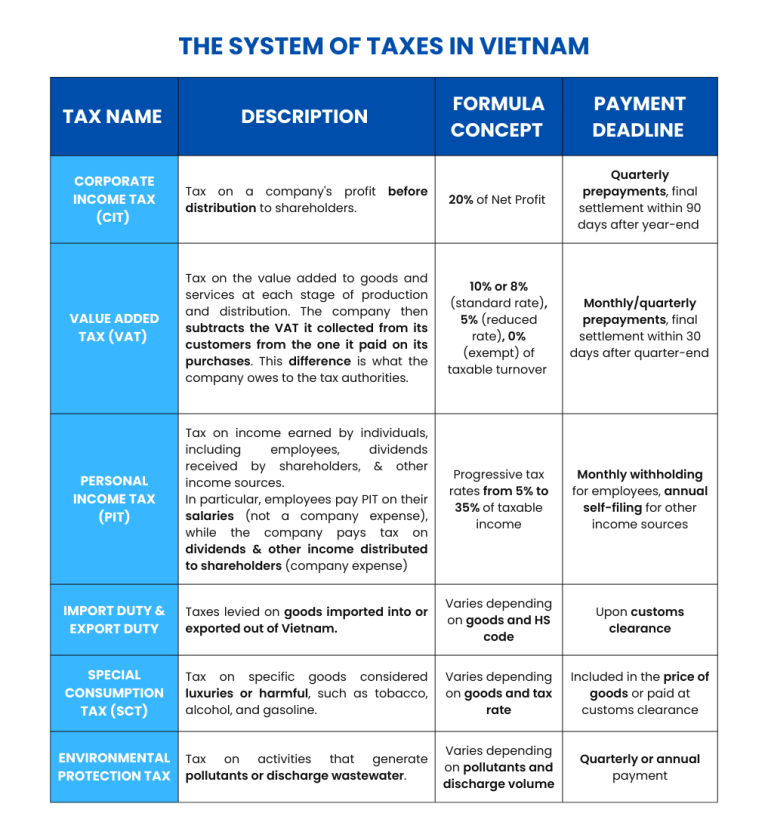
Corporate Income Tax (CIT) Incentives for FDI Projects
The standard CIT rate in Vietnam is 20%. Qualifying FDI projects can access significantly lower rates and holidays based on sector, location, scale, and technology.
Preferential CIT Rates and Exemption Periods
10% CIT Rate (applied for 15–25 years, depending on project):
- High-tech enterprises, strategic technology projects (including semiconductors, AI data centers, R&D centers)
- Renewable energy, clean technology, and environmental protection projects
- Infrastructure projects (important transport, power plants, water supply – especially those approved by the Prime Minister)
- Projects in extremely difficult socio-economic areas, high-tech zones, economic zones, and concentrated digital technology zones
- Large-scale manufacturing projects with investment capital of VND 12 trillion or more (disbursed within 5 years) using advanced technology
For certain strategic high-tech and Group 1 high-tech enterprises (effective from July 2026 under the updated High Technology Law), the 10% rate can extend up to 25 years.
17% CIT Rate (for 10 years):
- Priority manufacturing sectors (supporting industries for textiles, electronics, automobiles, mechanics)
- New projects in difficult socio-economic areas or certain economic zones
- SME-supporting projects and innovation incubators
Tax Exemptions and Reductions (Tax Holidays):
- Up to 4 years full CIT exemption + 50% reduction for the next 9 years for many high-tech, semiconductor, and infrastructure projects
- Shorter holidays (2 years exemption + 4 years 50% reduction) for other priority projects
- Additional deductions for R&D expenses, accelerated depreciation, and increased deductible expenses for technology transfer and training
Important 2026 Updates:
- Industrial parks (IPs) in developed areas no longer automatically qualify for location-based CIT incentives. Benefits now require meeting high-tech, green, or net-zero criteria.
- Disbursement thresholds apply — incentives are linked to actual capital injection timelines.
- The Investment Support Fund can provide cash grants or top-up support to offset impacts of the global minimum tax for qualifying large investors.
Import Duty and Other Tax Incentives
FDI projects in encouraged sectors enjoy:
- Exemption from import duties on goods used to form fixed assets (machinery, equipment, components)
- Exemptions or reductions on raw materials and spare parts for a specified period (often 5–10 years, extendable for high-tech projects)
- Value-added tax (VAT) refunds or deferrals on imports during the construction phase
- Exemptions on land use tax or fees in priority zones
Supporting industries and technology-transfer projects receive additional benefits, including credits for workforce training and R&D.
Land Policies and Incentives for Foreign Investors
Foreign-invested enterprises (FIEs/FDI companies) cannot own land outright in Vietnam but have robust rights to lease land from the State or sublease in industrial zones.
Land Lease Rights and Durations
Under the Land Law 2024 (with 2026 implementing mechanisms):
- FDI entities can lease land directly from the State for production, business, or infrastructure purposes.
- Lease terms typically range from 50 years (standard) up to 70 years for projects in high-tech zones, economic zones, or those with special incentives. Extensions are possible.
- Payment options: One-time lump-sum payment for the entire term or annual payments, with flexibility to switch in certain cases under 2026 resolutions.
- Subleasing rights in industrial parks, export processing zones, and high-tech zones are clearly permitted and simplified.
Land Rent Exemptions and Reductions
Land incentives are among the most valuable for FDI:
- Full exemption from land rent for 3–15 years (or longer for strategic projects) in high-tech zones, economic zones, difficult areas, or for green/sustainable projects.
- Reductions of 50–100% on land lease fees for priority sectors such as semiconductors, renewable energy, and infrastructure.
- Support for infrastructure development on leased land, including government contributions to site clearance and basic infrastructure in designated zones.
- Fast-track land allocation/lease procedures for “green lane” projects in industrial parks, high-tech zones, and economic zones.
2026 Enhancements:
- Streamlined procedures for land recovery and allocation when investors secure agreements with 75%+ of land users.
- Enhanced support for leasing public land and premises to innovative and supporting-industry enterprises.
- Integration with national land databases for faster approvals and transparency.
Projects in economic zones and high-tech zones benefit from combined tax and land packages, often including ready-built factories with additional rental discounts.
Special “Green Lane” Procedures and Mega Projects
The Law on Investment 2025 introduces a fast-track “green channel” for high-priority FDI:
- Simplified approvals, waived or expedited environmental impact assessments, construction permits, and fire safety approvals.
- Projects in high-tech zones, digital technology zones, economic zones, and strategic sectors (semiconductors, AI, green tech) qualify.
- Decentralized decision-making to provincial levels for most projects.
- Extended project durations up to 70 years in select zones.
Mega projects or those involving significant technology transfer, R&D, and workforce training receive customized incentive packages negotiated with authorities.
Eligibility Criteria and Application Process
To qualify for incentives in 2026:
- Obtain Investment Registration Certificate (IRC) — many projects can now establish the enterprise first and register the investment later.
- Demonstrate alignment with priority sectors/locations via detailed project documentation.
- Meet capital disbursement and operational milestones.
- Comply with beneficial ownership disclosure and environmental/sustainability standards.
Applications are submitted through provincial People’s Committees or specialized zone authorities. Online portals and national databases have accelerated processing times significantly.Investors should prepare feasibility studies highlighting technology level, job creation, export potential, and socio-economic contributions.
Strategic Considerations and Best Practices for 2026
- Sector Focus: Prioritize semiconductors, AI/data centers, renewable energy, supporting industries, and circular economy projects for the strongest packages.
- Location Strategy: High-tech zones (e.g., Hoa Lac, Saigon Hi-Tech Park), economic zones, and emerging provinces offer superior combined incentives compared to saturated major cities.
- Sustainability and Technology: Green certifications, net-zero commitments, and local R&D integration strengthen applications.
- Risk Mitigation: Engage licensed consultants early for due diligence on land titles, incentive certificates, and compliance with global tax rules.
- Exit and Expansion Planning: Structure investments to preserve incentive eligibility for future expansions or transfers.
Vietnam’s policies increasingly reward long-term, high-value commitments over low-cost manufacturing.
Maximizing Opportunities in Vietnam’s 2026 FDI Landscape
Tax incentives and land policies in Vietnam 2026 represent a refined, targeted approach to attract quality FDI. By focusing on innovation, sustainability, and strategic industries, the government offers competitive advantages that can substantially reduce setup and operational costs for foreign investors.
While standard industrial park benefits have narrowed, opportunities in high-tech, green, and infrastructure sectors have never been stronger. Combined with procedural simplifications and the green lane mechanism, Vietnam positions itself as a forward-looking investment hub in Asia.
Foreign investors should conduct thorough project structuring with experienced legal, tax, and advisory firms to fully leverage available incentives. Regulations continue to evolve, so professional guidance tailored to your specific sector and scale is essential for long-term success in this dynamic market.
Read other relevant articles:
- Vietnam Tax Policy Updates 2026 – VAT, CIT, PIT, and Tax Administration: What FDI Investors Need to Know
- Tax Obligations and Incentives for FDI Companies in Vietnam
- Tax Litigation – La Défense Vietnam
- Tax Regulations to Consider in M and A Transactions