

Vietnam’s real estate market continues to appeal to foreign investors, expatriates, and high-net-worth individuals in 2026. Driven by economic growth, urbanization, and improving legal clarity, the country offers opportunities for foreigners to own residential property. However, strict rules apply due to the constitutional principle that all land belongs to the Vietnamese people and is managed by the State.
The Housing Law 2023 (effective August 1, 2024, with ongoing implementation in 2026) and the Land Law 2024, alongside the Real Estate Business Law, form the core framework. These laws maintain and clarify foreign ownership rights while imposing quantitative limits, time restrictions, and location-based conditions. Foreigners cannot own land freehold but can own the housing structure itself on a leasehold basis in approved commercial projects.
This comprehensive 2026 guide details eligibility, what foreigners can and cannot buy, ownership durations, caps, procedures, taxes, risks, and practical advice for secure acquisition.

Can Foreigners Own Property in Vietnam in 2026?
Yes, but with significant limitations. Foreign individuals and certain foreign organizations may own residential housing, including apartments, condos, villas, and townhouses in designated commercial housing projects. Ownership applies only to the building/structure, not the underlying land, which remains under State management through land-use rights leased for the ownership term.
Key governing laws in 2026 about home ownership:
- Housing Law 2023 (primary rules on foreign ownership)
- Land Law 2024 (land-use rights and lease terms)
- Real Estate Business Law 2023 (transaction and developer rules)
- Related decrees and provincial implementations
Foreign ownership is prohibited in areas related to national defense and security, as designated and publicly announced by provincial authorities.
Who Is Eligible to Buy Property?
Foreign individuals are eligible if they are permitted to enter Vietnam (valid passport with entry stamp or equivalent). No minimum stay or residency requirement applies for most purchases. Eligible foreign organizations include:
- Foreign-invested economic organizations with valid investment certificates operating in Vietnam
- Branches/representative offices of foreign companies, foreign investment funds, and foreign bank branches
Special cases:
- Foreigners married to Vietnamese citizens enjoy near-full rights equivalent to locals.
- Foreigners married to eligible overseas Vietnamese receive expanded rights.
Tourist visa holders can purchase property, but due diligence on financing and compliance is essential.
What Types of Property Can Foreigners Own?
Foreigners are restricted to commercial housing projects developed for sale or lease-purchase.
Apartments and Condominiums
- Most common and straightforward option for foreigners.
- Ownership includes the apartment unit plus proportional common areas and facilities.
- Foreign buyers can acquire from project developers or from other foreign owners/organizations already holding title.
Detached Houses, Villas, and Townhouses
- Allowed only in approved commercial housing projects (not existing residential areas or standalone plots).
- Land-use rights are granted for the ownership term alongside the house.
Foreigners cannot buy agricultural land, bare land for self-construction (outside projects), or properties in restricted security zones. Social housing is generally unavailable to foreigners.
Ownership Limits and Quotas in 2026
Strict caps prevent excessive foreign concentration:
Apartment/Condo Caps
- Maximum 30% of total residential units in any single building or block.
- If a project has multiple buildings sharing a common podium/base, the 30% cap applies per block/building.
- Once the quota is reached in a building, further sales to foreigners are prohibited (units revert to Vietnamese buyers only).
Detached House/Villa Caps
- No more than 250 houses (villas, townhouses, etc.) in an administrative area equivalent to a ward (approximately 10,000 population).
- This cap applies across all projects in that area. If multiple projects exist, the total foreign-owned houses cannot exceed 250.
These limits are monitored at the project and local authority level. Developers track and report foreign sales.
Duration of Ownership Rights
Foreign ownership is time-limited:
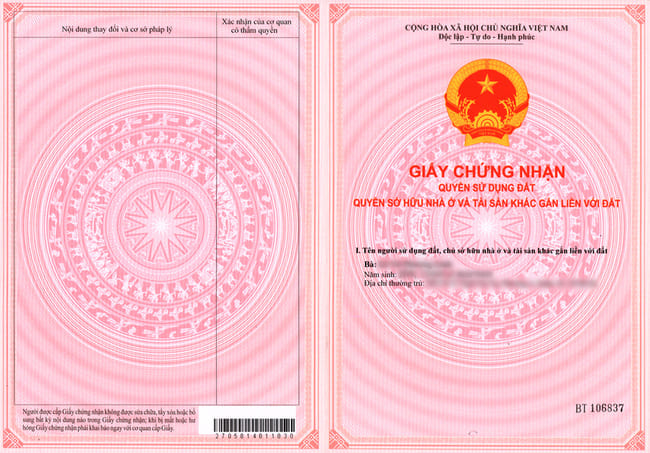
- Initial term: 50 years from the date the Certificate of Ownership (Pink Book) is issued.
- Extension: One-time renewal of up to 50 additional years (total maximum 100 years), subject to application and approval before expiry.
- Upon expiry without extension, rights revert to the State, with possible compensation or negotiation depending on circumstances.
The ownership certificate clearly states the term. Extensions are generally granted if the owner complies with laws and the project remains operational.
Step-by-Step Purchasing Process for Foreigners in 2026
- Due Diligence and Project Selection
Verify the project has foreign ownership approval, check remaining foreign quota, confirm developer legitimacy, and review the master plan and land-use rights. - Sign Reservation Agreement and Pay Deposit
Standard practice; deposits are typically 5–10% and refundable under certain conditions. - Sign Sale and Purchase Agreement (SPA)
Notarized at a notary office or competent authority. Must comply with Housing Law requirements. - Payment and Financing
Full payment or installments as per contract. Foreign buyers often use overseas funds transferred via licensed banks. Domestic mortgages for foreigners are limited but possible through certain banks. - Application for Ownership Certificate (Pink Book)
Developer or buyer submits documents to the provincial Department of Justice or land registration office. Processing time: 30–60 days under streamlined 2026 procedures, though delays can occur. - Registration and Handover
Receive the Pink Book, which serves as proof of ownership and is required for utilities, resale, or inheritance.
Electronic property ID codes introduced in March 2026 enhance transparency and tracking.
Taxes and Fees for Foreign Property Buyers/Owners
- Registration Fee: Approximately 0.5% of transaction value.
- Personal Income Tax (PIT) on Sale: 2% of transfer price (or 25% on profit in some cases) if sold within the ownership term.
- Value-Added Tax (VAT): Usually borne by the developer on new properties.
- Annual Property-Related Fees: Modest land rent (included in ownership), maintenance fees for common areas, and possible local taxes.
- Inheritance/Gift Tax: Applicable but with exemptions in family cases.
Professional tax advice is recommended, as double-tax treaties may apply.
Rights and Obligations of Foreign Property Owners
Owners enjoy rights to use, lease, mortgage (to authorized Vietnamese banks), gift, or transfer the property to eligible buyers (Vietnamese citizens, other foreigners within quotas, or qualifying organizations) during the ownership term.
Obligations include:
- Using the property for residential purposes as permitted.
- Paying fees and taxes on time.
- Complying with building management rules.
- Not subverting national security or public order.
The property can be inherited by eligible heirs, subject to the remaining ownership term.
Risks and Challenges in Home Ownership 2026
- Quota Saturation: Popular projects in Ho Chi Minh City, Hanoi, Da Nang, and Nha Trang often reach foreign limits quickly.
- Project Delays or Disputes: Common in real estate; choose reputable developers.
- Term Expiry: Need proactive extension applications.
- Resale Liquidity: Secondary market for foreign-owned properties can be narrower.
- No Automatic Immigration Benefits: Property ownership does not grant residency, visa extensions, or permanent residency (though long-term ownership and investment may support visa applications indirectly).
- Financing Restrictions: Limited local mortgage options for non-residents.
Special Considerations: Marriage, Inheritance, and Corporate Ownership
- Marriage to Vietnamese Citizen: The foreign spouse gains rights nearly identical to Vietnamese nationals, including potential land-use rights in some cases.
- Inheritance: Eligible heirs (including foreigners) can inherit, but must comply with ownership caps and terms.
- Foreign Companies: FDI entities can own housing tied to investment projects or for employee accommodation under specific conditions.
Overseas Vietnamese (with Vietnamese nationality) enjoy significantly broader rights, almost equivalent to domestic citizens under the Land Law 2024.
Best Practices and Recommendations for Foreign Buyers in 2026
- Engage licensed Vietnamese lawyers and reputable real estate agents early for due diligence.
- Work only with licensed developers and verify project approvals.
- Conduct thorough title searches and quota checks.
- Use escrow services where available for payments.
- Plan for the 50-year term and potential extension or exit strategy.
- Consider combining property purchase with FDI or business setup for additional benefits and stability.
- Monitor provincial announcements on restricted areas and updated procedures.
Vietnam’s real estate laws continue evolving toward greater transparency, with digital tools and streamlined processes improving in 2026.
Opportunities and Realistic Expectations for Foreign Home Ownership in Vietnam 2026
Foreign home ownership in Vietnam is viable and increasingly accessible for apartments and select landed properties in commercial projects. The 50-year (renewable) ownership term, combined with 30% building caps and 250-house area limits, provides a balanced framework that protects national interests while welcoming international buyers.
While foreigners cannot achieve freehold land ownership, the Pink Book provides secure, transferable rights suitable for personal use, retirement, or investment. High-demand cities and coastal areas offer strong rental yields and capital appreciation potential in a growing economy.
Success depends on careful project selection, professional legal support, and full compliance with quotas and procedures. Property ownership alone does not confer residency, so align purchases with long-term visa, business, or lifestyle plans.
For personalized advice, consult qualified Vietnamese legal and real estate professionals familiar with 2026 regulations, as local implementations can vary by province. Vietnam’s property market offers rewarding opportunities for informed foreign buyers seeking exposure to one of Asia’s most dynamic economie.
Disclaimer
The information provided in this article is for general informational and reference purposes only. It reflects the legal framework as of 2026 and does not constitute official legal advice, professional legal opinion, or a substitute for individualized legal counsel. Laws and regulations in Vietnam are subject to frequent changes, and the application of these rules may vary depending on the specific circumstances of each investment project.
We strongly recommend that you consult our experienced FDI lawyers or qualified legal advisors for a detailed assessment, risk analysis, and tailored solutions that best suit your business objectives and specific situation.
Read more other relavant articles:
- Vietnam Business Ideas 2026: Top Sectors & Legal Guide
- Personal Data Protection Compliance in Vietnam 2026: Obligations for Businesses Under the New Data Protection Law
- Business Structures for Foreign Investors in Vietnam: Complete 2026 Guide – LLC, JSC, Branch, Representative Office & More
- Vietnam’s Legal Overhaul: Paving the Way for International Business
- Investment in Vietnam through Business Cooperation Contracts (BCC): Legal Framework and Key Notes for Foreign Investors